In this guide Jump to a section
Size the load you need to keep cold
Start with the perishable food that will need cold storage, not a cooler’s advertised number of cans. List the containers and quantities you expect to transfer, then set aside space for ice or frozen packs. A dry fit at home reveals whether they fit together while leaving room for the lid to close.
The closest related guide helps choose between a powered 12 V compressor fridge and a passive ice cooler. This page helps size the passive cooler and monitor food temperature once you choose it.
| Published model example | Interior dimensions | Separate capacity claims | What the figures do not tell you |
|---|---|---|---|
| RTIC 52 QT Ultra-Light | 21.25 × 12 × 12 in | 76 cans without ice; 51 lb ice-only; 21 lb empty | Simultaneous food-plus-ice volume or safe holding time. RTIC describes this model as injected molded, so it is not a rotomolded example. |
| YETI Tundra 45 | 18.3 × 9.4 × 10.7 in | 54 cans only; 37 lb ice only | Simultaneous food-plus-ice volume or safe holding time. |
These manufacturer specs help compare fit, but neither model’s published dimensions determine how long your food will stay cold. Use the inside dimensions to test your actual packages and cold sources. Check the full load’s weight, lifting route, and whether the cooler fits where you can keep it closed and shaded.
Dry-fit before the outage
- Put the refrigerated items you would transfer into a list. Prioritize food that needs refrigeration, and keep medicines or infant feeding needs on their own plan.
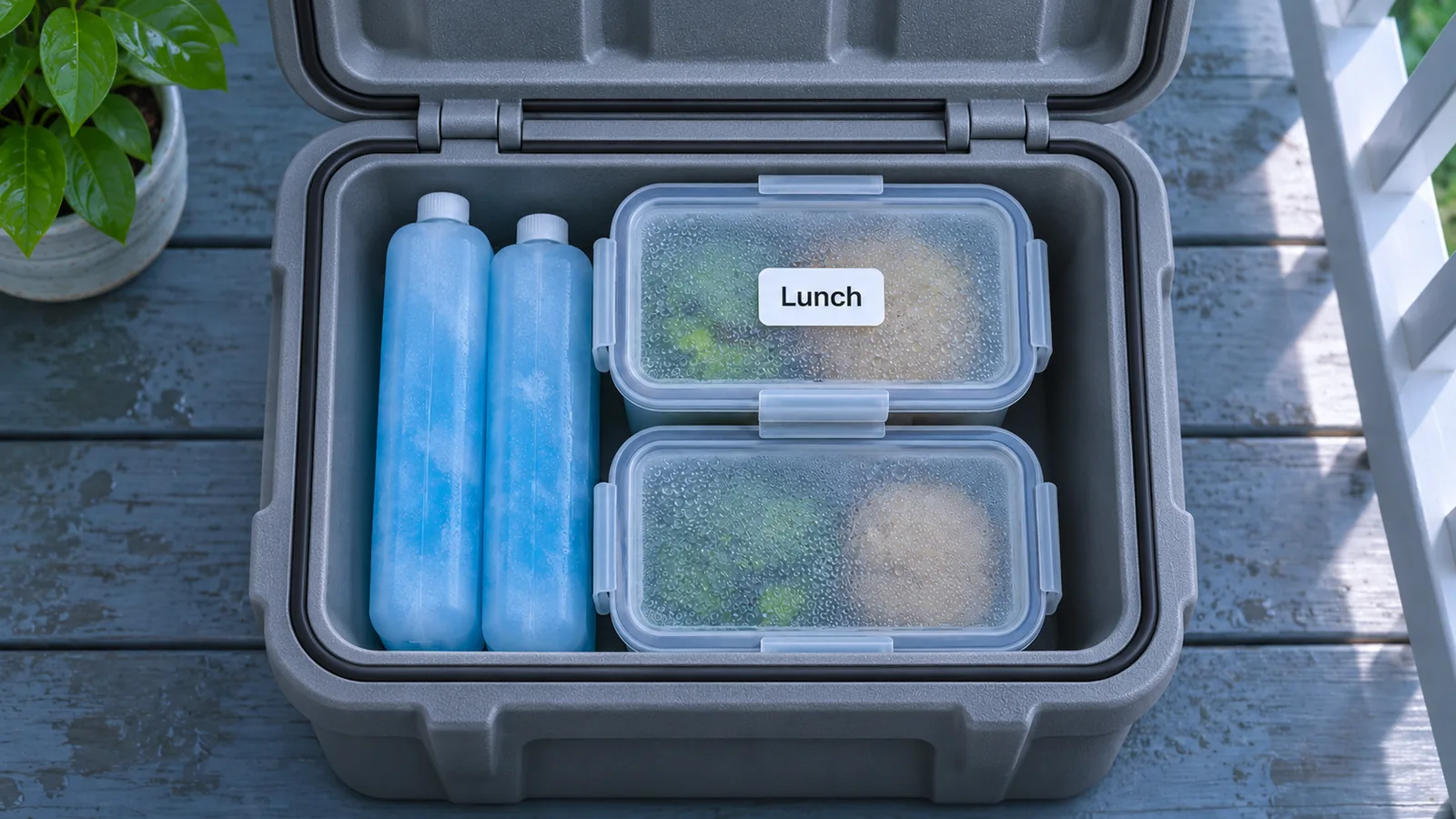
- Measure or arrange the actual sealed containers in the cooler. Add the ice packs or ice you can realistically keep frozen or obtain.
- Close the lid. If it does not close without pressing on food, remove items or choose a larger container.
- Place an appliance thermometer where it can be read without leaving the lid open for long. Keep a separate food thermometer available for checking individual food when guidance calls for it.
- Write down where the cooler and extra cold sources will be stored, and how you will replenish them if the temperature rises.
There is no universal ice-to-food ratio here: the package shapes, starting temperature, ice arrangement, opening frequency, room heat, and cooler condition all affect the outcome. A practice pack can expose a space problem, but it cannot certify how long food will stay safe in a future outage.
Monitor food temperature during the outage
Keep refrigerator and freezer doors closed while power is out. USDA FSIS says an unopened refrigerator generally keeps food cold for about four hours; if an outage lasts longer, transfer refrigerated perishables to a cooler with ice or frozen gel packs. Keep cold food at or below 40°F (4.4°C) and use the thermometer to check it. When access is needed, take out what you need together and close the lid again.
Use a simple log so a rising temperature is visible before you need to decide about food:
| Time | Cooler temperature | Action |
|---|---|---|
| Transfer | Record reading and food moved | Close cooler; note cold source used |
| Planned check | Record reading without extended lid opening | Add or replace cold source if needed; check food as directed |
| Temperature above 40°F | Record time and temperature | Follow the FoodSafety.gov outage chart for each food; do not taste to decide |
USDA FSIS advises that food should not remain above 40°F for more than 2 hours, or more than 1 hour when the surrounding temperature is above 90°F. Some frozen items have separate guidance based on ice crystals and temperature, so check the official food-specific outage chart rather than applying one rule to everything.
When you need active cooling
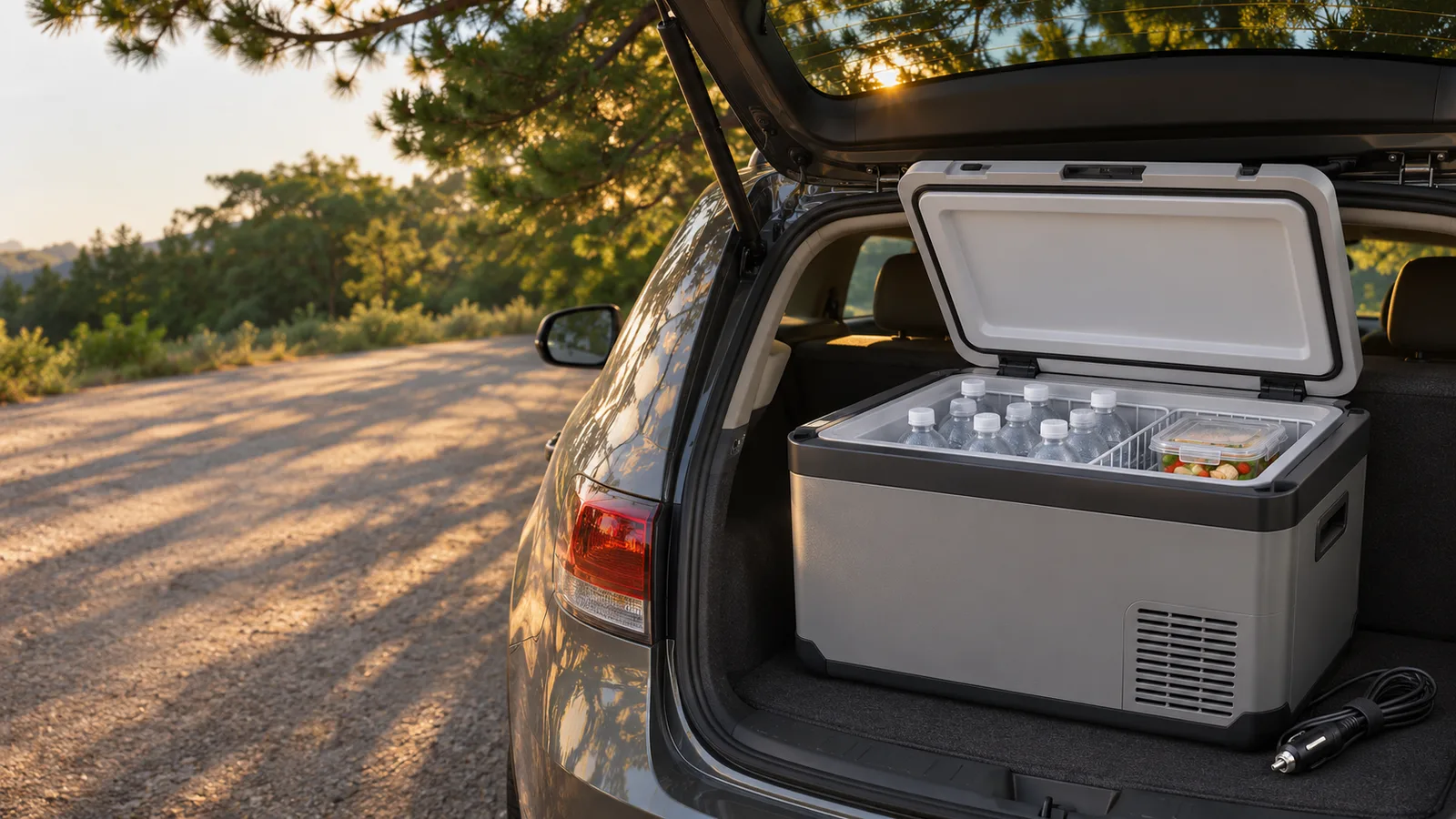
A passive cooler needs ice or another cold source to maintain its temperature. An active compressor fridge needs power sized for its actual draw and operating conditions. The ICECO VL45 ProS is a manufacturer-listed 45 L single-zone model with AC and 12/24 V DC inputs and a stated range from −18°C to +10°C; this range describes the product setting, not a guarantee of food temperature during a power outage.
ICECO VL45 ProS 45-Liter 12V DC Compressor Portable Refrigerator
- Temperature range
- -18°C to +10°C (0°F to 50°F)
Why it fits A powered single-zone alternative to passive ice cooling, with manufacturer-listed AC and 12/24 V DC inputs. Check the product specifications and size a compatible power source for your use; the listed temperature range does not establish outage runtime or food-safe performance.
Key trade-off The VL45 ProS is a single-zone cabinet (it cools the entire 45L interior to either refrigerator *or* freezer temperatures, not both simultaneously)—if you need separate fridge and freezer compartments at once, step up to the dual-zone ICECO VL60 ProD.
Specifications & research
ICECO VL45 ProS 45 L compressor fridge. Source records checked on 2026-11-16. Manufacturer research, not hands-on testing.
- Storage volume
- 45 Liters (47.5 Quarts) — Holds ~60 cans or 3 grocery bags · Source checked 2026-11-16
- Compressor unit
- Danfoss / Secop BD35F (5-Year Compressor Warranty) · Source checked 2026-11-16
- Temperature range
- -18°C to +10°C (0°F to 50°F) · Source checked 2026-11-16
Manufacturer documentation. Confirm exact ICECO model specifications and household safety limits before buying.
Use the Food Storage Calculator to plan shelf-stable staples and water alongside refrigerated items. For the related cooling-method decision, see 12 V portable compressor fridge vs. rotomolded ice cooler during an outage.