In this guide Jump to a section
Choose the safest available water
Follow your local drinking-water advisory first. Safe bottled water is the first choice when available. Boiling is the preferred way to kill germs when bottled water is unavailable. If fuel, toxic chemicals, or radioactive material may be present, use another water source and contact your local health department.
CDC emergency water bleach dosage chart
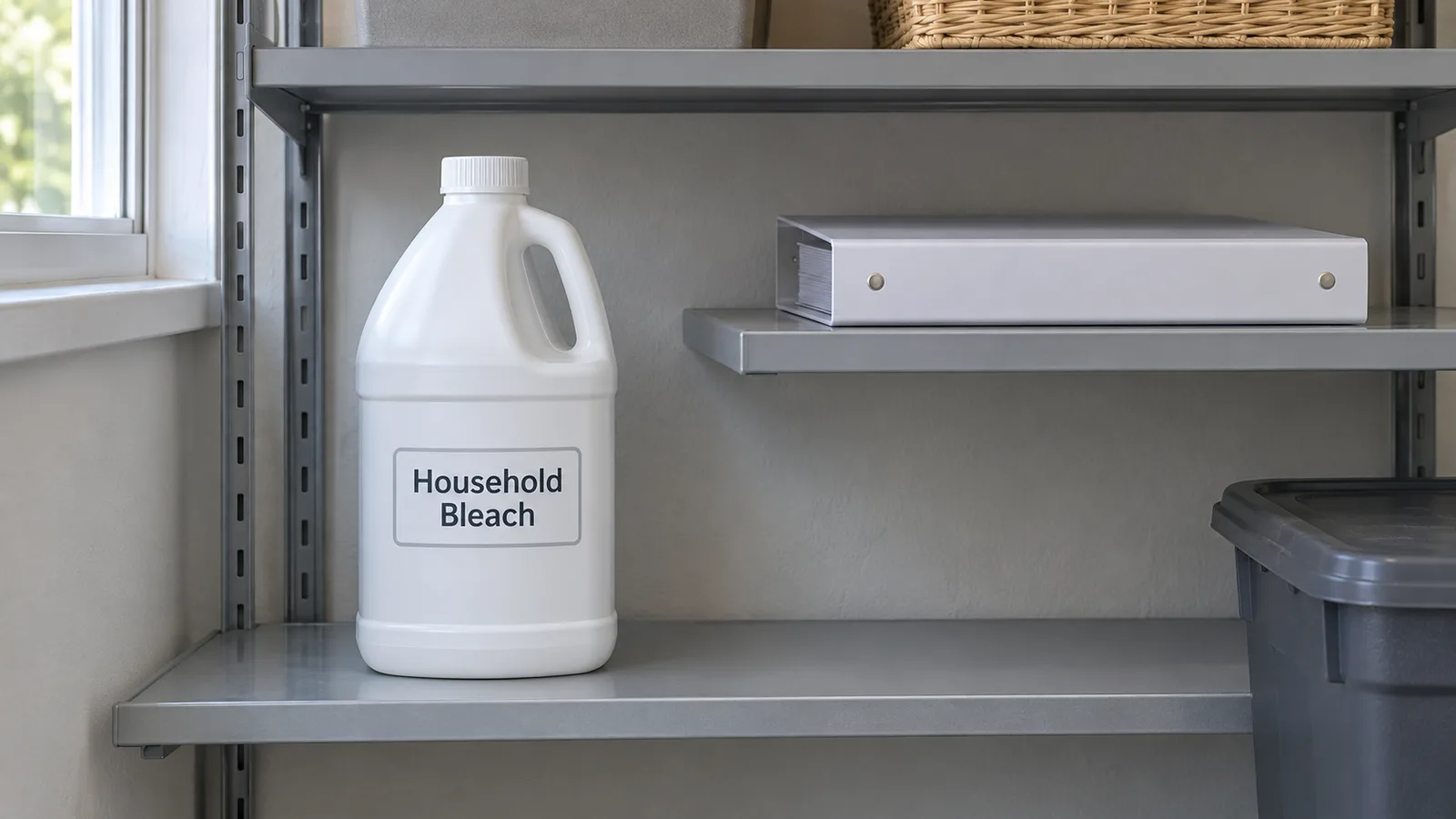
The table below is the CDC reference for household chlorine bleach labeled 5%–9% sodium hypochlorite. First read the label for drinking-water disinfection instructions. Use only plain, unscented chlorine bleach suitable for disinfection. Check the CDC instructions for other listed strengths. If the strength or suitability is unclear, use another water source.
| Water volume | Drops of 5%–9% bleach | Milliliters of bleach |
|---|---|---|
| 1 US quart or 1 liter | 2 | 0.1 mL |
| 1 US gallon | 8 | 0.5 mL |
| 5 US gallons | 40 | 2.5 mL |
For cloudy water, let it settle or filter it through a clean cloth, paper towel, or coffee filter first. CDC directs readers to double its listed amount for cloudy, murky, colored, or very cold water. Stir well, wait at least 30 minutes, and store it in a clean, sanitized container with a tight cover.
The EPA instructions give a separate chart for specific concentrations and advise using fresh bleach or bleach stored at room temperature for less than one year. Follow the complete directions for whichever method your health department recommends.
Kit checklist
- Check the label. Keep a suitable product in its original labeled bottle and replace it according to official guidance.
- Keep a clean measuring tool. Use a dropper or a tool marked in milliliters, as specified by the reference you are following.
- Keep the official instructions with the kit. Record the health department’s contact and the location of your emergency water supply plan.
When to use another method
Bleach is less effective than boiling against some parasites. If you suspect chemical contamination, use safe bottled water or another approved source and ask your health department what to do. See the comparison of emergency water treatment methods for the differences between boiling, filtration, and disinfection.