A kit in a hallway cabinet has a different job from one kept in a vehicle or evacuation bag. Choose the location first, then check the actual package contents against what its users know how to use and what they can keep current.
The home emergency kit guide includes a modest first-aid layer. This guide focuses on selecting and maintaining the first-aid kit itself, without teaching treatment procedures or recommending medication.
Match the kit to its location
| Location | Questions before choosing | Storage check |
|---|---|---|
| Home | Can adults reach it quickly? Are contents useful for the household and familiar to likely users? | Keep the kit dry, visible to those who need it, and away from children if contents require restricted access. |
| Vehicle | Does the kit fit the vehicle’s likely use and passenger needs? | Check the product’s storage temperature and package limits against the vehicle’s expected heat and cold; inspect after trips or seasonal temperature changes. |
| Go-bag or workplace | Is the kit small enough to carry or easy to locate at work? | Keep it reachable without burying mobility aids, medication, or other urgent supplies. |
Do not assume one larger kit serves all locations. If you split supplies, write down which kit holds each item and who checks it. Follow the exact kit and item labels for storage; some contents have different handling limits.
Read the contents list, not just the front of the box
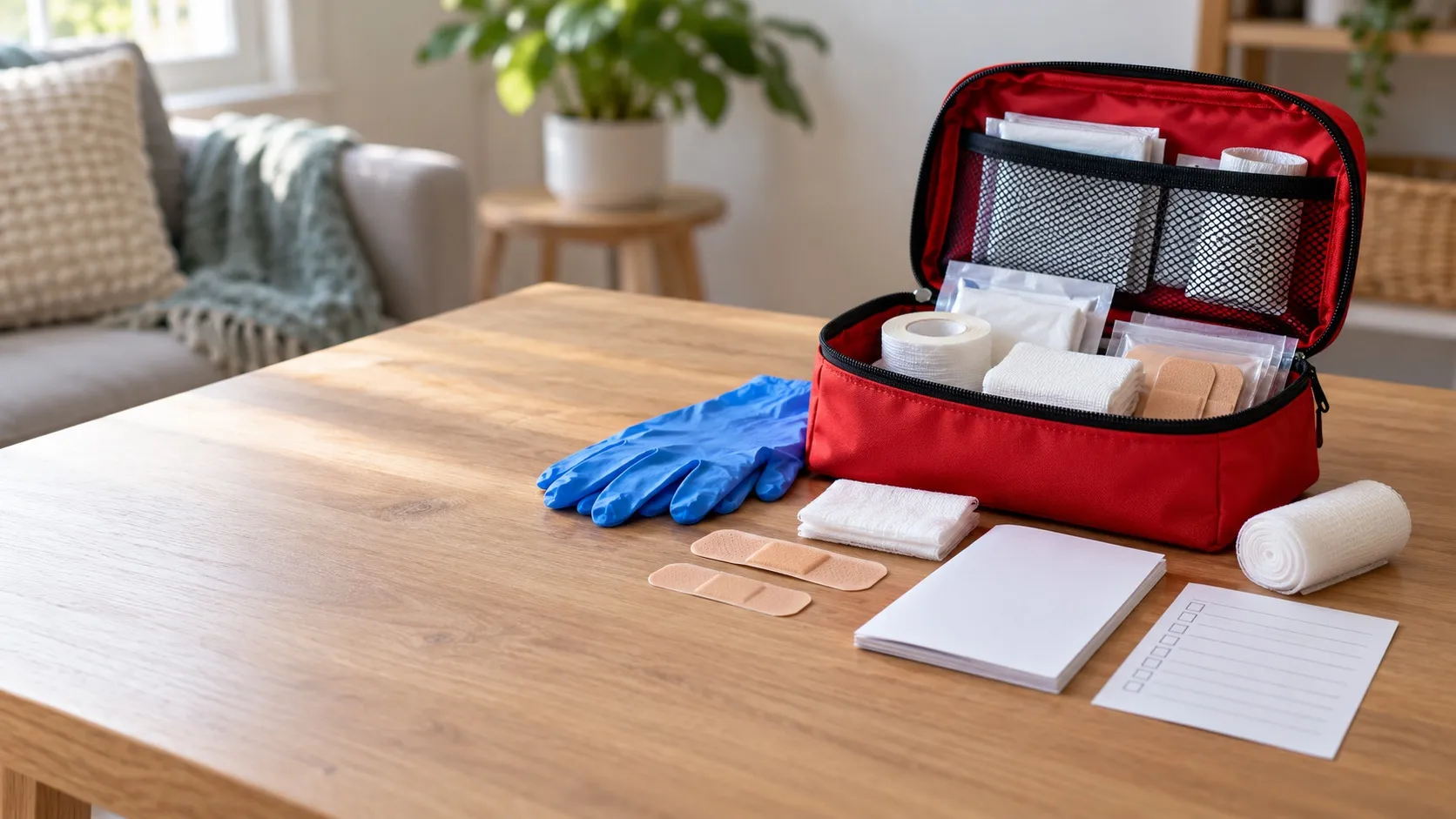
Compare the exact list and quantity for each kit. Red Cross’s family-kit list, for example, names dressings, bandages, tape, gloves, gauze, a thermometer, tweezers, and written first-aid instructions. It is a reference list, not proof that a particular retail package contains those items or that every household needs identical amounts.
Check whether each item is intact, clearly identified, within its labeled date where one is provided, and something at least one intended user has learned to use. Do not buy advanced equipment because it appears in a bundle if no one can use it. Keep prescribed medicines and individual care supplies under the person’s clinician or pharmacist guidance; a general kit list cannot decide whether a medicine belongs in a kit or how it should be stored.
If unfamiliar kit contents prompt you to learn a skill, choose a reputable first-aid class and practice within its curriculum. Do not treat a printed card or online list as equivalent to training. For a life-threatening emergency, contact local emergency services; MedlinePlus lists warning signs that need emergency help.
ANSI/ISEA standards: Class A vs. Class B kits
When comparing commercial kits, packages often reference the ANSI/ISEA Z308.1 standard. Understanding these ratings helps you avoid under-equipped or unnecessarily complex kits:
| Standard Level | Intended Environment | Typical Minimum Supplies | Best Fit |
|---|---|---|---|
| Class A | Common household, desk, or light office environments | Adhesive bandages, tape, antiseptic applications, burn dressing, sterile gauze pads, eye wash, and medical exam gloves | General household pantry or hallway cabinet for minor everyday cuts and scrapes |
| Class B | Higher-risk environments (home workshops, chainsaws, rural properties) | Everything in Class A, plus padded splints, multiple roller bandages, and severe bleeding tourniquets | Garages, workshops, or off-grid homesteads with power tool hazards |
In addition to class ratings, ANSI defines container types: Type I (indoor stationary wall mounts), Type II (indoor portable cases), Type III (portable, moisture-resistant containers ideal for vehicles and boats), and Type IV (heavy-duty, impact-resistant cases for rough outdoor travel).
First-aid kit record
Keep one record for each location. Do not put private medical details on a public-facing copy.
| Item to record | Entry |
|---|---|
| Kit location and person who can reach it | |
| Kit brand/model or source and purchase date | |
| Exact contents list saved or photographed | |
| Items users know how to use; training date or next class to consider | |
| Personal additions checked with the appropriate clinician or pharmacist | |
| Expiring, used, damaged, missing, or heat-affected contents | |
| Replacement source and next review date |
First-aid kit selection FAQ
- How do I choose the right first-aid kit for my home?
- Start by identifying where the kit will live (a dry, accessible hallway or kitchen cabinet). Look for an ANSI Class A compliant kit that covers common household injuries (burns, abrasions, cuts, and sprains). Verify that every supply is familiar and that you can inspect and restock expired items every 6 months.
- What is the difference between Class A and Class B first-aid kits?
- ANSI Class A kits are designed for common low-hazard injuries in households and offices. Class B kits are built for high-risk hazards (such as workshops or power tools), adding larger trauma dressings, splints, and tourniquets.
- Should I buy a pre-packaged kit or build my own?
- A certified pre-packaged kit provides an organized baseline in a labeled container. However, you should customize it with personal household additions, such as necessary prescription medications, pediatric supplies, or backup glasses.
- How often should emergency first-aid supplies be replaced?
- Check first-aid kits every 6 months. Antiseptic wipes, antibiotic ointments, burn treatments, adhesive bandages, and medications have explicit expiration dates after which their packaging seals, sterile barriers, or active ingredients degrade.
The Red Cross advises checking a kit regularly and replacing contents that are used or out of date. Set a reminder that fits the labels and your use; check sooner after opening, using, or storing the kit in extreme conditions. If a serious need cannot be handled with the supplies and training you have, the next step is professional help, not a larger unverified kit.