In this guide Jump to a section
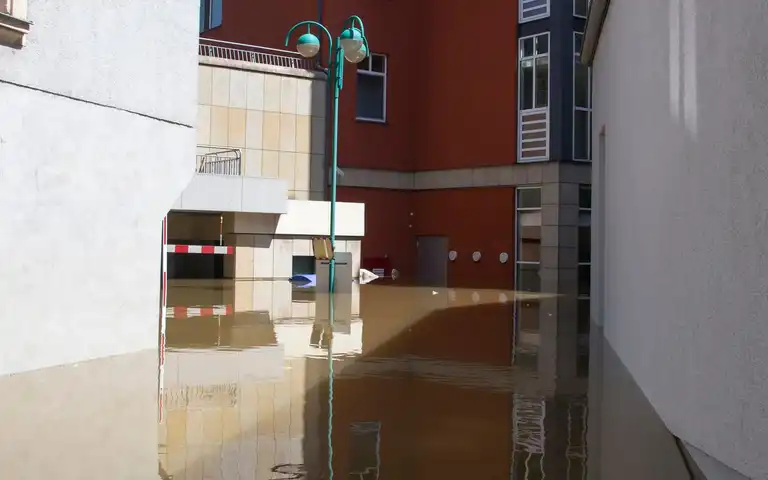
When a severe earthquake, hurricane, or urban infrastructure failure strikes during the workday, household members are rarely in the same place. Parents are at separate workplaces, children are at school or daycare, and older relatives may be at home.
In the immediate aftermath, hundreds of thousands of people reach for their smartphones simultaneously. Within three minutes, local cellular towers experience demand surges that exceed network switching capacity by 800% or more. Phone calls fail to connect, yielding fast-busy tones or recorded carrier announcements.
If your household relies solely on dial-up voice calls or group chat apps without a predetermined protocol, panic quickly sets in. A family emergency communication plan eliminates guesswork through simple, proven routing rules and a physical, laminated wallet card that never runs out of battery.
The physics of network collapse: why SMS beats voice
During a major crisis, local phone circuits experience acute technical bottlenecks. Understanding how cellular infrastructure handles traffic explains why text messaging is mandatory:
Circuit-switched voice vs. packet-switched SMS
- Dedicated Voice Trunks: A standard voice call requires a dedicated, continuous bi-directional voice channel between the handset, the local cell tower, and the core mobile switching center. When simultaneous call requests spike, the tower’s voice channel capacity saturates completely within seconds.
- Control Channel Data Packets: Short Message Service (SMS) operates over the cellular Signaling System No. 7 (SS7) control channel. This is the lightweight signaling channel your phone uses simply to announce its presence to nearby towers. An SMS message contains fewer than 140 bytes of data.
- Store-and-Forward Queuing: If a cell tower is at 100% data capacity, a voice call is dropped instantly. In contrast, SMS messages use store-and-forward architecture. The phone repeatedly attempts to transmit the tiny 140-byte packet during fractional-second lulls in network traffic until the packet clears.
| Communication Channel | Data Bandwidth Required | Network Saturation Failure Point | Delivery Resilience in Disasters | Recommended Disaster Protocol |
|---|---|---|---|---|
| Cellular Voice Call | ~64 kbps continuous stream | Immediate failure at 3x normal baseline call volume | Very Low (rapid circuit drops) | Use ONLY if life is in imminent danger and 911 connects |
| Cellular SMS (Text) | 0.14 kb (single burst packet) | Survives up to 20x baseline volume via packet queuing | Very High (arrives when lulls occur) | Primary family check-in protocol |
| Data Messaging Apps (WhatsApp, iMessage) | Variable (5–50 kb with handshakes) | Fails when local fiber or mobile 5G internet links drop | Moderate (requires active IP backhaul) | Secondary fallback if Wi-Fi or data connects |
| Satellite SOS Messaging | Low-bandwidth packet to low-earth orbit | Immune to terrestrial tower collapse | High (requires clear sky view) | Crucial backcountry and grid-down fallback |
The out-of-state relay contact protocol
The core failure of most family emergency plans is assuming local contacts will be reachable. If a severe ice storm, earthquake, or flooding strikes your metropolitan area, your local friends, in-laws, and neighbors are facing the exact same infrastructure blackout you are.
How to select your out-of-state contact
Your out-of-state contact acts as the central clearinghouse for your family’s status. Select someone who meets three strict criteria:
- Geographic Distance: They must live at least 200 to 500 miles away, preferably in a different state and outside your regional power grid and weather basin.
- Reliable Availability: Choose a relative or friend with a stable work environment who is rarely off-grid and understands their responsibility as the communications bridge.
- Explicit Agreement: Sit down or call this person before an emergency occurs. Walk them through their role: they must record incoming check-in messages from each family member and relay instructions between separated parties.
The standardized check-in text format
Do not send vague, emotional text messages like “Are you okay? Call me!” These waste bandwidth and invite repeated back-and-forth messaging. Train every family member to send a single, concise status text following the I-A-M-D format:
- I (Identity): Who is reporting (“This is Sarah”).
- A (All right / Status): Physical condition (“I am uninjured”).
- M (Meeting Point / Location): Where you are right now (“At downtown office, 4th floor”).
- D (Destination / Next Move): Where you are heading (“Walking to Meeting Point 2, public library”).
Example message: “Sarah OK. Downtown office undamaged. Walking to Point 2 library now.”
The three-tier emergency meeting place system
When cell towers fail entirely and text messages cannot clear, family members must know precisely where to rendezvous without exchanging a single word. Designate three specific locations:
Tier 1: Immediately outside the residence (house fire or gas leak)
Choose a fixed, permanent landmark at least 50 feet away from your home:
- The neighborhood mailbox cluster on the corner.
- The large oak tree at the end of the driveway.
- The front porch steps of a specific neighbor across the street.
Tier 2: Inside the neighborhood (local street closure or immediate evacuation)
If an incident blocks access to your street (such as downed high-voltage power lines or a hazardous chemical spill):
- The neighborhood community park pavilion.
- The front entrance of the elementary school four blocks away.
- The parking lot of the neighborhood branch library.
Tier 3: Regional / Out-of-neighborhood safe haven (city-wide disaster)
If the entire municipality is placed under an evacuation order and local neighborhoods are barricaded:
- A designated relative’s home in an adjacent town.
- A prominent municipal building outside the flood zone.
- A state park trailhead parking area along your primary evacuation highway.
School and childcare pickup authorization rules
During a disaster, public and private schools enforce strict perimeter security lockdowns. Under state educational safety codes, school administrators will not release your child to anyone not pre-authorized on their official emergency registration card, even if the adult is a known family friend.
Critical school coordination requirements
- Authorize at least three local guardians: Ensure at least two neighbors within walking distance of the school are listed on your child’s official pickup list. If highways are gridlocked by traffic, you may not be able to drive home from an office 15 miles away.
- Match government photo IDs: Explain to your designated emergency guardians that they must carry their physical driver’s license or passport to the school gate. School staff under stress will verify names letter-for-letter against their roster.
- Provide child wallet cards: Place a laminated emergency contact card in the interior zippered pocket of your child’s backpack. Train children as young as age five to know where the card is and to hand it to a first responder or school nurse if separated.
Printable family wallet card specifications
A family communication card must survive friction, rain, perspiration, and daily wallet storage. Paper folded from a desktop printer disintegrates within weeks.
Fabrication instructions
- Print on 65 lb or 80 lb cardstock: Cardstock provides physical rigidity and prevents ink bleed.
- Dimensions: Cut to 3.375 inches by 2.125 inches (standard ISO/IEC 7810 ID-1 credit card size).
- Lamination: Seal inside a standard 5-mil or 10-mil thermal laminating business card pouch. If you lack a thermal laminator, wrap the card completely in clear 2-inch commercial packaging tape, pressing out air bubbles and burnishing edges with the back of a spoon.
Standardized wallet card content template
Each member should carry a double-sided card organized according to this exact layout:
| Card Face | Section | Field Entries to Fill Out |
|---|---|---|
| FRONT | Cardholder ID | Full Legal Name, Date of Birth, Primary Home Address |
| FRONT | Out-of-State Relay | Contact Name, Relationship, Primary Cell Phone, Secondary Landline, City/State |
| FRONT | Local Parents / Guardians | Parent A Name & Cell Phone; Parent B Name & Cell Phone; Workplace Addresses |
| BACK | Emergency Rendezvous | Point 1 (Neighborhood Address); Point 2 (Local Facility); Point 3 (Regional Location) |
| BACK | Child Care & Medical | School Name & Phone; Pediatrician Name & Phone; Critical Allergies / Blood Type |
| BACK | Authorized Escorts | Name and Cell Phone of the 2 neighbors authorized to pick up child from school |
Digital device setup: ICE contacts and Medical ID
Physical cards are essential, but modern smartphones also provide vital communication bridges when properly configured:
In Case of Emergency (ICE) lock-screen integration
Emergency personnel and Good Samaritans can access emergency contact numbers without unlocking your device:
- Apple iOS (Medical ID): Open the Health app, tap your profile picture, select Medical ID, and configure Emergency Contacts. Ensure “Show When Locked” is enabled. First responders can tap Emergency on your lock screen, then tap Medical ID to view your out-of-state relay number and life-saving allergy data.
- Android (Emergency Information): Navigate to Settings > Safety & emergency > Emergency contacts. Add your primary relay contact and ensure “Show on lock screen” is toggled on.
Bi-annual rehearsal drills
A communication plan that has never been practiced will fail when adrenaline surges. Twice per year—coinciding with seasonal clock changes—conduct an unannounced household drill:
- Text your out-of-state contact using the exact I-A-M-D format.
- Verify that your relay contact receives the text, logs the status, and replies.
- Inspect every wallet, purse, and school backpack to ensure physical laminated cards remain legible and undamaged.
- Verify that school registration forms have been updated following any change in neighbor phone numbers or residential addresses.