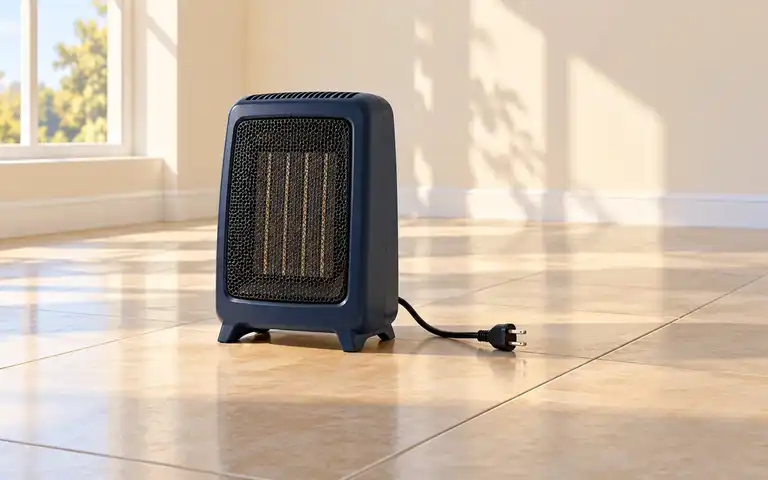
A single gallon of liquid kerosene holds 135,000 BTU of heat energy—roughly 47% more energy per gallon than liquid propane (91,500 BTU/gal) and stored at zero vapor pressure in a non-pressurized jug. That high energy density explains why rural homesteads have long kept a 10,000 BTU/hr radiant or 23,000 BTU/hr cylindrical convection kerosene heater in the barn or basement for multi-day ice storms.
Yet portable kerosene heaters also cause some of the most severe winter house fires and indoor air-quality emergencies in North America. Unlike sealed propane canisters, kerosene requires manual liquid pouring, wick maintenance, and strict fuel-grade verification (clear 1-K only). Even a half-cup of gasoline accidentally mixed into a kerosene can lowers the fuel’s flash point from 100°F+ to below -40°F, turning the heater into a flare-up fire bomb.
Start with household risk: who should never be in a kerosene-heated room
Before calculating gallons and tank hours, check both medical vulnerability and local legal restrictions:
- Infants, young children, pregnant women, older adults, and anyone with asthma, bronchitis, COPD, or heart disease face elevated risk from unvented kerosene heaters. Even clean
1-Kkerosene releases sulfur dioxide (SO2), nitrogen dioxide (NO2), carbon monoxide (CO), and fine soot particles that can trigger acute respiratory distress. - Kerosene heater outer metal cages reach
300°F to 500°F+during operation, creating an immediate contact-burn hazard for toddlers, crawling infants, and household pets. - State and Municipal Bans: Portable unvented kerosene heaters are prohibited or strictly restricted inside residential dwellings in Massachusetts, California, New York City, and numerous local fire jurisdictions. Always check your municipality’s fire code and your homeowners or renters insurance policy before purchasing one.
Mr. Heater Portable Buddy (MH9BX)
- Heating Area Sq Ft
- 225
Why it fits A propane heater requires careful attention to its manual, ventilation, and local rules; never use it in a vehicle.
Key trade-off Requires adequate ventilation (minimum 4 sq in fresh-air opening recommended by manufacturer) during indoor operation.
Specifications & research
Portable propane heater. Source records checked on 2026-11-04. Manufacturer research, not hands-on testing.
- Heat Output Btu Per Hour
- 4,000 / 9,000 · Source checked 2026-11-04
- Heating Area Sq Ft
- 225 · Source checked 2026-11-04
- Fuel Type
- Propane · Source checked 2026-11-04
Manufacturer documentation. Confirm exact Mr. Heater model specifications and household safety limits before buying.
Kerosene heater runtime math: 135,000 BTU per gallon
Unlike portable propane heaters (which allow you to dial the flame between Low, Medium, and High), wick-style portable kerosene heaters are engineered to burn at one fixed, calibrated wick height. Turning a kerosene wick down too low cools the catalytic burner chimney, causing incomplete combustion, thick black soot, and a sharp spike in lethal carbon monoxide (CO).
To find how many hours your heater runs per gallon and per tank:
Hours per Gallon = 135,000 BTU/gal / Heater Rated Output (BTU/hr)
Hours per Tank = Hours per Gallon × Usable Tank Capacity (Gallons)
Worked example 1: 10,000 BTU/hr Rectangular Radiant Kerosene Heater (1.9-Gallon Tank)
Rectangular radiant heaters (which use a polished reflector behind a glowing stainless burner drum to heat a 300 to 400 sq ft room) are typically rated around 9,000 to 10,500 BTU/hr:
- Dividing
135,000 BTUby10,000 BTU/hrgives13.5 hours per gallon(burn rate: ~0.074 gal/hr). - Multiplying
13.5 hrs/galby a1.9-gallontank yields25.65 hoursper tank (or roughly 2 days if run 12 waking hours per day).
Worked example 2: 23,500 BTU/hr Cylindrical Convection Kerosene Heater (1.9-Gallon Tank)
Round 360-degree convection heaters (designed to heat a larger 700 to 1,000 sq ft open room or basement) are typically rated around 23,000 to 23,500 BTU/hr:
- Dividing
135,000 BTUby23,500 BTU/hrgives5.74 hours per gallon(burn rate: ~0.174 gal/hr). - Multiplying
5.74 hrs/galby a1.9-gallontank yields10.9 hoursper tank (consumes nearly 2 gallons per waking day).
| Heater Style & Output Rating | Fuel Burn Rate (Gal/Hr) | Runtime per 1.0 Gallon (135,000 BTU) | Runtime on Typical Tank (1.2 to 1.9 Gal) | 72-Hour Outage Fuel Required (14 Waking Hrs/Day = 42 Hrs) |
|---|---|---|---|---|
Compact Radiant (9,000 BTU/hr) | 0.067 gal/hr | 15.0 hours | 18.0 hrs (1.2 gal tank) | 2.8 gallons (~3.5 gal with reserve) |
Standard Radiant (10,000 BTU/hr) | 0.074 gal/hr | 13.5 hours | 25.6 hrs (1.9 gal tank) | 3.1 gallons (~4.0 gal with reserve) |
Large Convection (18,000 BTU/hr) | 0.133 gal/hr | 7.5 hours | 14.2 hrs (1.9 gal tank) | 5.6 gallons (~6.5 gal with reserve) |
Heavy Convection (23,500 BTU/hr) | 0.174 gal/hr | 5.7 hours | 10.9 hrs (1.9 gal tank) | 7.3 gallons (~8.5 gal with reserve) |
Fuel purity and flash-point physics: why 1-K Clear is mandatory
Every UL-listed portable kerosene heater manual specifies ASTM D3699 Grade 1-K clear (undyed) kerosene and warns against three common fuel mistakes:
- Why even trace gasoline causes an explosion: Pure
1-Kkerosene has a minimum flash point above100°F (38°C), meaning liquid kerosene sitting in the bottom fuel sump at room temperature (68°F) does not give off flammable vapors; it only burns where capillary action draws it up to the hot wick tip. Gasoline has a flash point of-45°F (-43°C). If someone fills kerosene into a red gasoline container that still holds a few ounces of leftover gasoline, the mixed fuel gives off explosive gasoline vapors inside the heater’s fuel tank. As the heater warms up, those vapors ignite across the entire tank, shooting flames out of the body and cannot be turned off with the wick knob. Use only dedicated BLUE containers labeledKEROSENE. - Why red-dyed pump kerosene and
2-Kruin wicks and air quality: Many gas stations dispense1-Kkerosene from an outdoor pump dyed red to indicate it is tax-exempt (non-highway fuel). While the base distillate may be1-K, the red organic dye does not vaporize cleanly on a fiberglass wick—within 1 to 3 tanks, it coats the top of the wick in hard carbon tar, restricting fuel flow and generating pungent smoke and elevatedCO. When possible, buy water-clear, undyed1-Kkerosene in factory-sealed 2.5-gallon or 5-gallon jugs (or verify with the fuel dealer that the pump dispenses undyed1-K), and store it in a cool, dark shed for up to1 to 2 yearsin sealed metal cans (3 to 6 monthsin plastic jugs after opening). - Never refuel a hot or running heater, and never refuel indoors: Always shut off the heater, wait until the burner housing is completely cool to the touch, and carry either the removable fuel cartridge or the entire cold heater outdoors to refuel with a battery-powered or manual siphon pump.
Never Adjust the Wick Down to 'Save Fuel'
Unlike a propane valve, a kerosene heater wick is designed to operate only within its narrow white/orange indicator band on the adjuster knob. Turning the wick down below the normal operating band drops the temperature of the catalytic combustion dome, causing unburned hydrocarbon vapors and high concentrations of lethal carbon monoxide (CO) to pour into the room. If the room gets too warm, shut the heater completely off rather than turning the wick low.
Kerosene heater safety and refueling checklist
Use this mandatory checklist before operating any portable kerosene heater during a power outage:
- Check local fire law and insurance rules first: Confirm your city/state permits unvented portable kerosene heaters in residential buildings.
- Inspect fuel clarity in a clear glass jar: Before pouring fuel into the tank, siphon a small sample into a clear glass jar—it should look water-clear (not red, yellow, cloudy, or smelling like gasoline) with zero water droplets at the bottom.
- Maintain
3-foot(36-inch) clearance on all sides: Keep the heater on a level, non-combustible floor pad well away from curtains, furniture, doorways, kids, and pets. - Crack an exterior window
1/2 inchand run both CO and smoke alarms: Test your battery-powered carbon monoxide alarm and photoelectric/dual-sensor smoke alarm before lighting the wick. - Light and extinguish outdoors if possible: Kerosene wicks emit their highest spike of odor, unburned hydrocarbons, and soot during the first 3 minutes after ignition and the first 3 minutes after shutoff.
- Shut the heater completely OFF before going to sleep: Never sleep in a room with a burning kerosene heater.
Compare kerosene heaters against cleaner-burning alternatives in our propane heater tank runtime calculation guide, our indoor propane heater ODS sensor limits guide, and our winter blackout home heat-loss calculation guide.
Frequently asked questions
How long will a kerosene heater run on one tank?
Kerosene contains roughly 135,000 BTU per gallon. Divide 135,000 BTU by your heater’s rated BTU per hour to find hours per gallon: a 10,000 BTU/hr radiant heater runs for about 13.5 hours per gallon (roughly 25.6 hours on a 1.9-gallon tank), while a 23,500 BTU/hr cylindrical convection heater runs for about 5.7 hours per gallon (roughly 10.9 hours on a 1.9-gallon tank).
Is it safe to use a kerosene heater indoors?
Using a kerosene heater indoors carries serious fire, burn, sulfur dioxide, and carbon monoxide risks, and is banned in several states and cities (including Massachusetts and New York City). Where legal, use only a UL-listed indoor model, burn water-clear ASTM D3699 Grade 1-K kerosene stored exclusively in blue containers, refuel outdoors only after the heater has cooled completely, crack a window for fresh air, install battery-powered CO alarms, and never run the heater while sleeping.
Can you burn diesel or red-dyed kerosene in an indoor kerosene heater?
Never burn #1 or #2 diesel fuel, home heating oil, or 2-K kerosene inside a portable indoor kerosene heater; they contain high sulfur levels and heavy hydrocarbons that produce toxic fumes and thick soot. Even 1-K kerosene that has been dyed red for tax-exemption purposes will rapidly coat a fiberglass wick with carbon tar—always look for clear, undyed 1-K kerosene for indoor wick heaters.