In this guide Jump to a section
- Start with the household: who is most vulnerable to indoor combustion byproducts
- The mechanics of the pilot light, thermocouple, and Oxygen Depletion Sensor (ODS)
- Oxygen depletion vs. carbon monoxide accumulation: why ODS does NOT replace CO alarms
- Worked math: calculating minimum window ventilation and room size
- Indoor propane heater safety checklist
- Frequently asked questions
During a deep winter power outage, portable radiant propane heaters—most notably the 4,000 to 9,000 BTU/hr and 18,000 BTU/hr cabinet/ceramic models certified under ANSI Z21.11.2 (such as the Mr. Heater Buddy series)—are among the most widely purchased emergency heat sources in North America. They are also among the most misunderstood.
On one side, online forums sometimes claim that because these units have an Oxygen Depletion Sensor (ODS), you can seal a bedroom tight and run them all night while you sleep. On the other side, readers often confuse indoor-certified radiant ceramic heaters (ANSI Z21.11.2) with uncertified outdoor tank-top construction heaters (ANSI Z83.7), which can fill a room with lethal carbon monoxide (CO) in minutes.
Before lighting any combustion heater indoors, start with household vulnerability and mechanical physics: an Oxygen Depletion Sensor does not measure carbon monoxide, and understanding how the brass thermocouple and pilot orifice actually work will keep your family alive when the grid goes dark.
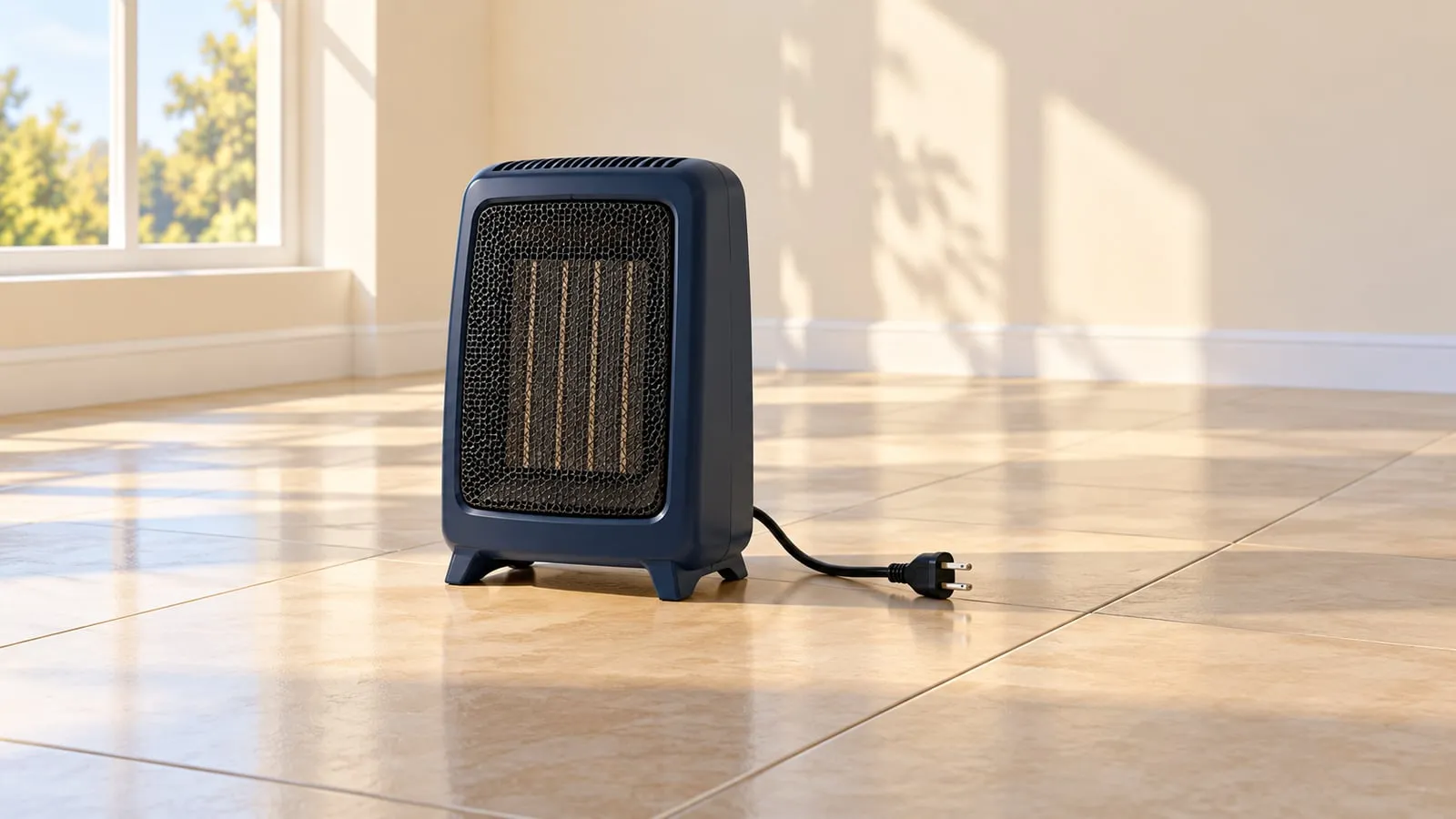
Mr. Heater Portable Buddy (MH9BX)
- Heating Area Sq Ft
- 225
Why it fits Delivers dual 4,000 and 9,000 BTU/hr clean radiant heat with a factory-calibrated Oxygen Depletion Sensor (ODS) and accidental tip-over mechanical safety shut-off.
Key trade-off Requires adequate ventilation (minimum 4 sq in fresh-air opening recommended by manufacturer) during indoor operation.
Specifications & research
ANSI Z21.11.2 Indoor-certified portable propane radiant heater. Source records checked on 2026-11-04. Manufacturer research, not hands-on testing.
- Heat Output Btu Per Hour
- 4,000 / 9,000 · Source checked 2026-11-04
- Heating Area Sq Ft
- 225 · Source checked 2026-11-04
- Fuel Type
- Propane · Source checked 2026-11-04
Manufacturer documentation. Confirm exact Mr. Heater model specifications and household safety limits before buying.
Start with the household: who is most vulnerable to indoor combustion byproducts
Any unvented propane heater releases its combustion products—primarily water vapor (H2O), carbon dioxide (CO2), trace nitrogen dioxide (NO2), and small quantities of carbon monoxide (CO)—directly into the room air you breathe. Before considering an unvented heater, evaluate everyone in the room:
- Infants, pregnant women, and unborn babies face the highest physiological risk because fetal hemoglobin binds to carbon monoxide far more tightly than adult hemoglobin, and infants breathe at rapid respiratory rates. Even low-level
COexposure (25–50 ppm) that causes only a mild headache in a healthy adult can harm a fetus or infant. - Older adults and anyone living with asthma, COPD, or heart disease must account for moisture and nitrogen oxides: unvented propane combustion releases trace nitrogen dioxide (
NO2) and roughly10.8 ounces of liquid water vapor per 1 lb propane cylinder burned, which can trigger bronchospasm in asthmatics and increase cardiac strain. - Pets, especially birds and small mammals, have highly sensitive respiratory systems that react rapidly to airborne combustion gases and low-ppm carbon monoxide; pet birds should never be kept in a room heated by an unvented combustion appliance.
- Local fire and building codes vary by state: Massachusetts prohibits unvented liquid-propane portable heaters inside residential dwellings, California restricts unvented room heaters, and Canadian (
CSA) models of the same heater often carry outdoor/tent-only ratings due to stricter national indoor ventilation rules.
The mechanics of the pilot light, thermocouple, and Oxygen Depletion Sensor (ODS)
Despite its high-tech name, an Oxygen Depletion Sensor (ODS) contains no microchip, no battery, and no electronic gas sensor. It is a purely thermodynamic and fluid-mechanical assembly built around a calibrated Venturi pilot burner and a bimetallic thermocouple probe.
Step-by-step physics of the ODS shutoff
- The Seebeck-effect thermocouple: When you hold down the igniter knob and light the pilot, the small blue pilot flame heats a brass thermocouple tip to roughly
1,000°F–1,200°F. Because the thermocouple is made of two dissimilar metals joined at the tip, that heat generates a tiny electrical current (15 to 30 millivolts) via the thermoelectric Seebeck effect. - The electromagnetic hold-in valve: That
20 mVcurrent flows through a wire (wired in series with the weighted pendulum tip-over switch) to an electromagnet inside the main gas control valve, holding the spring-loaded gas plunger open against spring tension. - Flame-lift at
~18.0%oxygen: The ODS pilot tube is precision-drilled so its flame speed matches normal sea-level atmospheric oxygen (20.9% O2). If the room’s oxygen concentration drops toward18.0%(or if the heater is taken above7,000 feetof elevation where thinner air reduces oxygen partial pressure), the pilot flame must reach farther out into the room to find oxygen molecules. The base of the pilot flame physically lifts away from the thermocouple tip. - Snap shutoff: Within 15 to 30 seconds of the flame lifting off the tip, the thermocouple cools down, the millivoltage drops below the solenoid holding threshold, and the spring snaps the main propane valve shut—cutting fuel to both the main ceramic tile and the pilot.
Oxygen depletion vs. carbon monoxide accumulation: why ODS does NOT replace CO alarms
The single most dangerous myth in winter preparedness is believing that “if the ODS hasn’t shut the heater off, there is no carbon monoxide in the room.” Atmospheric oxygen percentage and trace carbon monoxide toxicity operate on completely different scales:
| Atmospheric Variable | Normal Fresh Outdoor Air | Threshold Where ODS Shuts Off Heater | Threshold That Causes Human Illness or Death | Why the ODS Alone Cannot Protect You |
|---|---|---|---|---|
Oxygen (O2) Concentration | 20.9% (209,000 ppm) | ~18.0% (180,000 ppm) | < 19.5% (OSHA oxygen-deficient); < 12–14% impaired judgment; < 6–8% fatal | Requires losing nearly 29,000 ppm (2.9%) of room oxygen before the pilot flame lifts |
Carbon Monoxide (CO) Concentration | 0 to 2 ppm | Does NOT measure CO! | 35–70 ppm headache/nausea in hours; 400 ppm life-threatening in 1–3 hrs; 1,600+ ppm fatal in < 1 hour | Just 400 ppm (0.04% of room air) of CO can kill a sleeping family while room oxygen is still at 20.5%—leaving the ODS pilot burning normally! |
How a heater produces CO while room oxygen is still 20%+:
- Dust, pet hair, or spiderwebs on the ceramic burner plaque or primary air mixer: If dust coats the microscopic pores of the ceramic burner tile after summer storage, portions of the propane flame burn orange/yellow (incomplete combustion) instead of glowing clean infrared red, emitting carbon monoxide into a well-oxygenated room.
- Plasticizer oil leaching from an unapproved 20 lb adapter hose: Connecting a standard black rubber propane hose to a
20 lbgrill cylinder without an inline fuel filter (F273699style) allows pressurized liquid propane to leach oily plasticizers out of the rubber hose wall, clogging the pilot and main burner orifices and causing dirty, incomplete combustion.
Never Sleep With an Unvented Propane Heater Running
Every ANSI Z21.11.2 portable propane heater manual prints the same warning on the unit and cover page: Never operate the heater while sleeping or unattended. Instead, run the heater while you are awake to warm the room and bedding, shut the gas valve completely OFF before going to sleep, and rely on an ISO-rated sleeping bag, insulated sleep pad, and hot water bottles overnight.
Kidde Nighthawk CO & Explosive Gas Alarm
Why it fits Provides continuous digital parts-per-million carbon monoxide and gas monitoring with battery backup, sounding an 85 dB alarm at trace levels before human impairment occurs.
Key trade-off Explosive gas detection requires plug-in AC power; on 9V battery backup during outages, unit only monitors carbon monoxide to preserve battery life.
Specifications & research
UL 2034 Digital carbon monoxide and explosive gas detector. Source records checked on 2026-11-04. Manufacturer research, not hands-on testing.
- Gases Detected
- Carbon Monoxide (CO), Natural Gas (Methane), and Propane · Source checked 2026-11-04
- Power Source
- 120V AC plug-in with 9V alkaline battery backup · Source checked 2026-11-04
- Digital Display
- Digital concentration readout (PPM for CO, % LEL for Gas) · Source checked 2026-11-04
Manufacturer documentation. Confirm exact Kidde model specifications and household safety limits before buying.
Worked math: calculating minimum window ventilation and room size
Every indoor-rated propane heater requires continuous fresh outdoor air exchange to replenish consumed oxygen, dilute trace combustion gases, and vent the heavy water vapor produced by burning propane.
The 1 Square Inch per 1,000 BTU/hr ventilation rule
Manufacturer manuals for ANSI Z21.11.2 portable propane heaters specify a minimum fresh-air ventilation opening of at least 1 square inch (1 in²) of open area to the outdoors for every 1,000 BTU/hr of heater output (with a typical minimum floor of 4 to 9 sq in depending on the model):
- Running on
Low(4,000 BTU/hr) requires at least4 square inchesof open window area (Minimum recommended room size: ~100 sq ftwith an 8-foot ceiling). - Running on
High(9,000 BTU/hr) requires at least9 square inchesof open window area (Minimum recommended room size: ~200–225 sq ft). - Running a dual-tile unit on
High(18,000 BTU/hrBig Buddy class) requires at least18 square inchesof open window area (Minimum recommended room size: ~400–450 sq ft).
How wide is a 9 square inch window opening?
You do not need to open a 30-inch-wide bedroom window by 9 inches (which would create a huge 270 sq in hole and freeze the room). Divide the required square inches by the width of your window sash:
- If your sliding or double-hung window is
30 incheswide, opening it by just0.30 inches(~5/16 of an inch, the thickness of a standard pencil) creates30 in × 0.30 in = 9.0 square inchesof fresh air exchange! - Even better, cracking two windows (or one window and the hallway door) by
1/4 incheach establishes gentle high-low pressure relief without chilling the floor.
Indoor propane heater safety checklist
Follow this verification checklist before and during any winter outage where an indoor-rated propane heater is used:
- Confirm the ANSI Z21.11.2 indoor certification label: Never bring an outdoor tank-top heater, patio heater, or propane camp stove indoors.
- Stage two battery-powered Carbon Monoxide (
CO) alarms: Place one digital-display CO alarm (which shows low-level readings down to10–30 ppmbefore the70 ppmsiren sounds) at breathing height in the heated room, and a second alarm in the hallway. - Crack a window to match your BTU setting: Provide
4 sq in(4,000 BTU/hr),9 sq in(9,000 BTU/hr), or18 sq in(18,000 BTU/hr) of outdoor air exchange. - Enforce strict fire clearances (
36 inchesfront /24 inchestop /6 inchessides & rear): Place the heater on a hard, level, non-combustible surface well away from curtains, bedding, kids, and pets. - Use a fuel filter or regulated quick-disconnect hose for 20 lb tanks: Keep all
20 lbbulk propane cylinders outdoors (never bring a20 lbtank inside a living space; NFPA 58 prohibits indoor storage/use of cylinders larger than1 lb), or use1 lbdisposable cylinders indoors. - Turn the heater completely OFF before sleeping: Never leave an unvented combustion heater running while everyone in the room is asleep.
To calculate exactly how many 1 lb canisters or 20 lb tanks you need for a 72-hour storm, read our propane heater tank runtime calculation guide and our winter blackout home heat-loss guide.
Frequently asked questions
How does an Oxygen Depletion Sensor (ODS) work?
An Oxygen Depletion Sensor (ODS) uses a precision-calibrated pilot burner and a bimetallic thermocouple probe to monitor room oxygen mechanically. At normal atmospheric oxygen levels (20.9%), the pilot flame burns tightly against the thermocouple tip, generating 15 to 30 millivolts of electricity that holds the main electromagnetic gas valve open. If the oxygen in an enclosed room drops toward roughly 18.0%, the pilot flame elongates and physically lifts away from the thermocouple probe; once the probe cools, the millivoltage drops to zero and the spring-loaded gas valve snaps shut.
Is it safe to sleep with a Mr. Heater Buddy running?
No, it is never safe to sleep while any portable unvented propane heater is running indoors. Manufacturers, fire codes, and the Consumer Product Safety Commission (CPSC) uniformly warn against unattended or overnight operation. While ANSI Z21.11.2 heaters include an Oxygen Depletion Sensor and a mechanical tip-over switch, dust on the ceramic burner or an obstructed orifice can produce lethal concentrations of odorless carbon monoxide (CO) long before room oxygen drops low enough to trigger the ODS shutoff.
Why does my indoor propane heater keep shutting off after a few minutes?
If an indoor propane heater lights on the pilot setting but shuts off after 2 to 10 minutes, the three most common causes are: (1) insufficient room ventilation causing local oxygen around the floor-level intake to dip, (2) dust or spiderwebs inside the tiny ODS pilot air hole (clean gently with compressed air when the unit is cold), or (3) high altitude above 7,000 feet, where lower atmospheric oxygen partial pressure causes the pilot flame to lift off the thermocouple prematurely.