In this guide Jump to a section
- How a standalone grid-charged home battery works
- Worked math: TOU bill arbitrage and standalone outage runtime
- Standalone home battery vs. portable power station vs. standby generator
- Federal tax credit and code rules for non-solar batteries
- Standalone home battery planning checklist
- Frequently asked questions
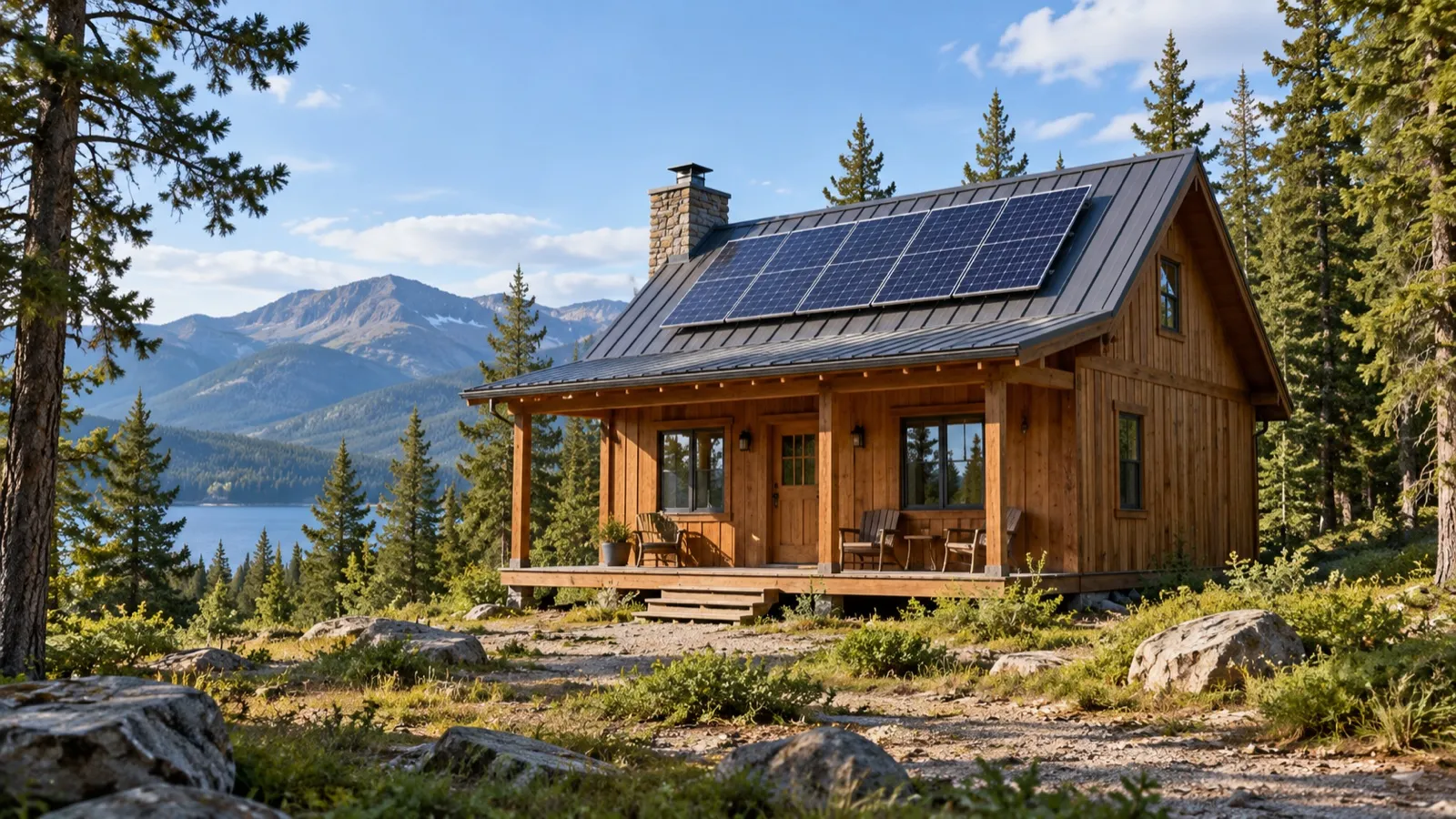
Many homeowners assume a whole-home battery wall requires an expensive rooftop solar array. If your roof is heavily shaded by mature trees, faces north, needs a shingle replacement within five years, or sits under strict HOA aesthetic rules, pairing solar panels with storage may not make financial or structural sense.
A standalone, grid-charged Energy Storage System (ESS) decouples backup power from solar generation. Wired directly to your home’s electrical service through an automatic transfer gateway or critical-loads subpanel, a standalone 10 kWh to 15 kWh battery charges from standard utility grid power, sits at the ready for weather emergencies, and transfers essential circuits in less than 20 to 100 milliseconds when a transformer blows.
The engineering tradeoff is straightforward: without rooftop solar panels, your battery is a finite fuel tank that cannot refill itself during a multi-day blackout. Understanding that single constraint—and calculating your exact daily kilowatt-hour burn rate—determines whether a standalone battery is the cleanest backup upgrade for your home or an expensive 24-hour bridge that leaves you in the dark on Day 2.
How a standalone grid-charged home battery works
In a solar-plus-storage home, a hybrid inverter manages both DC solar strings from the roof and DC battery modules on the wall. In a standalone grid-charged installation, there are no rooftop PV wires. Instead, an AC-coupled battery inverter connects between your utility meter, your main service panel, and a backed-up loads panel.
Three operating modes in daily life
- Pure Standby Backup Mode (
100%Reserve): The battery remains Trickle-topped at95%to100%state of charge (SoC) 365 days a year. This maximizes readiness for unannounced outages (such as vehicle strikes on utility poles or sudden seismic trips) and minimizes cyclic wear on the lithium iron phosphate (LiFePO4/LFP) cells. - Time-of-Use (TOU) Rate Arbitrage Mode (
20%–40%Backup Reserve): In utility territories with steep peak-to-off-peak rate differentials, the battery charges from the grid overnight when electricity is cheap (for example,12:00 AM–6:00 AM) and discharges into your home circuits during expensive late-afternoon peak windows (4:00 PM–9:00 PM), always stopping at your chosen emergency reserve floor (20%to40%). - Weather Alert Pre-Charge (“Storm Watch”): Modern battery gateways subscribe to National Weather Service (
NWS) severe weather feeds. When a high-wind warning, ice storm watch, or Red Flag Public Safety Power Shutoff (PSPS) alert is issued for your ZIP code, the gateway temporarily overrides TOU discharging and forces a rapid grid charge to100%before the storm front arrives.
Worked math: TOU bill arbitrage and standalone outage runtime
Sales proposals for standalone batteries often exaggerate both how much money you can save on Time-of-Use utility tariffs and how long a single 13.5 kWh battery lasts when the grid fails. Run both equations with real conversion losses before signing an installation contract.
1. Daily Time-of-Use (TOU) arbitrage savings equation
Every time you pull AC electricity from the utility grid, rectify it to DC to store in the battery, and invert it back to 120/240V AC during peak hours, you lose roughly 10% to 12% of the energy as heat (an AC-to-DC-to-AC round-trip efficiency of ~88% to 90%). In addition, if you keep 20% of the battery locked in reserve for unexpected outages, only 80% of the usable capacity can cycle daily for bill savings.
Suppose you install a 13.5 kWh battery on a utility TOU plan where off-peak overnight power costs 0.15 dollars per kWh and peak evening power (4:00 PM–9:00 PM) costs 0.40 dollars per kWh (a 0.25 dollars per kWh raw price spread):
- Daily cycling capacity (
80%of13.5 kWhleaving20%emergency reserve):13.5 kWh × 0.80 = 10.8 kWh stored DC - Grid energy purchased overnight at
0.15 dollars per kWh(accounting for95%charging efficiency):10.8 kWh / 0.95 = 11.37 kWh × 0.15 dollars per kWh = 1.71 dollars per day - Peak AC energy delivered back to the house (
95%inverter discharge efficiency,~90%total round-trip):10.8 kWh × 0.95 = 10.26 kWh × 0.40 dollars per kWh avoided = 4.10 dollars per day - Net daily TOU bill savings:
4.10 dollars avoided peak cost - 1.71 dollars overnight charge cost = 2.39 dollars per day(or roughly72 dollars per monthand872 dollars per yearif peak pricing applies 365 days a year; closer to520 dollars–650 dollars per yearif your utility only enforces high peak spreads on weekdays or summer months).
At 600 dollars to 850 dollars per year in TOU arbitrage savings, a standalone battery that costs 9,500 dollars to 13,500 dollars installed (after applicable incentives) will not pay for itself on utility rate arbitrage alone unless your utility also offers a Virtual Power Plant (VPP) capacity payment (such as 500 dollars–1,000 dollars per year for grid-relief dispatch events). Buy a standalone battery primarily for silent, automatic outage continuity, treating TOU arbitrage as a modest monthly offset.
2. Outage runtime math: critical subpanel vs. unmanaged whole home
Once the utility grid drops, a 13.5 kWh nominal battery kept at 100% Storm Watch reserve delivers roughly 11.0 kWh of usable AC energy after accounting for inverter conversion efficiency (~90%) and the internal electronics standby draw (25 W to 45 W continuous, which consumes 0.6 to 1.08 kWh per 24 hours just keeping the gateway alive).
| Outage Load Profile | Connected Circuits & Hourly Average Draw | Daily Energy Consumption (kWh/day) | Standalone 13.5 kWh Battery Runtime (~11.0 kWh Usable AC) | Standalone 27.0 kWh Dual-Stack Runtime (~22.0 kWh Usable AC) |
|---|---|---|---|---|
| Disciplined Critical Subpanel | Energy Star fridge (75 W avg), Wi-Fi/ONT (25 W), LED lights (40 W), CPAP (35 W), periodic sump pump (40 W avg) = 215 W avg | 5.16 kWh / day | ~48 to 51 hours (~2 full days) | ~96 to 102 hours (~4 full days) |
| Winter Gas-Furnace Subpanel | Critical subpanel above (215 W avg) + gas furnace ECM blower running 40% duty cycle (200 W avg) = 415 W avg | 9.96 kWh / day | ~26 hours (1.1 days) | ~53 hours (2.2 days) |
| Unmanaged Whole-Home Panel | Normal household habits + central heat pump or A/C (1,800 W avg), electric water heater, or induction cooking | 28.0 to 40.0 kWh / day | 6 to 9 hours (depletes before morning) | 13 to 18 hours (depletes on Day 1) |
The Day-2 Depletion Cliff Without Solar or a Generator
When a solar-paired battery hits its 5% to 10% shutdown floor overnight,
morning sunlight can restart the inverter and trickle-charge the pack back to
life. When a standalone grid-charged battery hits 0% usable reserve
during a 3-day ice storm, the system shuts down completely until utility
street power returns—unless your inverter includes a dedicated 240V AC
generator recharge input that allows a portable inverter generator to refill
the battery wall in 3 to 4 hours.
Standalone home battery vs. portable power station vs. standby generator
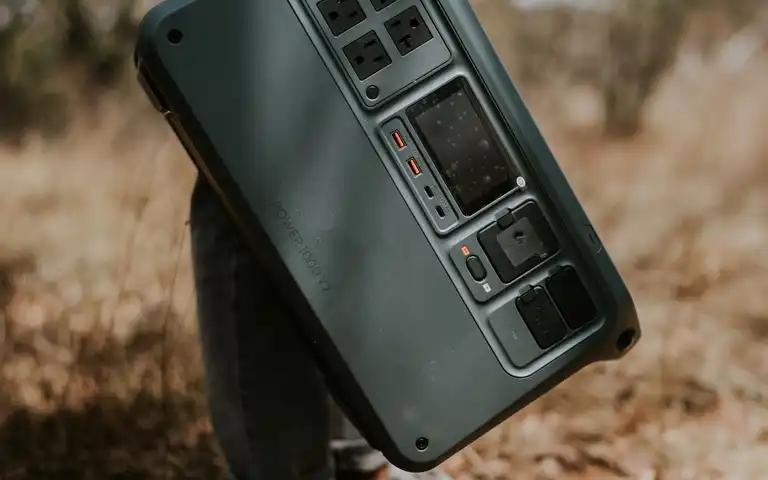
Before spending five figures on a permanent wall-mounted ESS, compare it against the two adjacent alternatives: a roll-around 3.6 kWh to 7.2 kWh expandable portable power station wired to a manual transfer switch, or a natural-gas / propane standby generator.
| Engineering & Financial Dimension | Standalone Grid-Charged Wall Battery (13.5 kWh Class) | Expandable Roll-Around Power Station (3.6–7.2 kWh + Manual Switch) | Permanent Standby Fuel Generator (14–24 kW NG / Propane) |
|---|---|---|---|
| Typical Installed Cost (Before Credits) | 11,500 to 16,500 dollars (includes UL 1741 MID gateway & subpanel wiring) | 3,200 to 6,000 dollars (power station + 600 to 1,200 dollars manual transfer switch) | 10,000 to 18,000 dollars (generator pad, ATS, gas-line plumbing, permits) |
| Switchover Latency | Automatic (< 20–100 ms); desktop PCs and CPAPs stay on seamlessly | Manual (5–15 minutes) to wheel unit out, plug in cord, and flip switches (unless paired with proprietary smart home panel) | Automatic (10–30 seconds); brief power blink while engine cranks and stabilizes |
| Multi-Day Outage Endurance | Limited (1–2 days) unless expanded or recharged by a portable fuel generator | Limited (12–36 hours) unless recharged via portable folding solar or small fuel generator | Unlimited (5–14+ days) on continuous utility natural gas or a 250–500 gal propane tank |
| Federal Clean Energy Tax Credit (IRC 25D) | Eligible (30% credit) if permanently installed and rated >= 3 kWh (NFPA 855 compliant) | Generally Ineligible unless permanently wired and certified as stationary storage per IRS rules | Ineligible (0% federal tax credit for fossil-fuel generators) |
| Noise, Fumes & HOA Acceptance | Zero emissions, silent (< 35 dB), compact garage/exterior wall footprint | Zero emissions, silent indoors, zero exterior HOA footprint | Loud (60–68 dB), exhaust fumes, strict 5 ft window/lot-line clearances |
XL Upgrade · 4 kWh 120V/240V Station
EcoFlow DELTA Pro 3
- Continuous AC output
- 4,000 W
Why it fits Serves households comparing a modular 120V/240V roll-around LFP system against a hardwired wall ESS. Confirm your critical-load subpanel transfer hardware, usable capacity, and recharge plan with a licensed electrician.
Key trade-off A single US DELTA Pro does not provide 240 V output. Two DELTA Pro units and a compatible separately sold Double Voltage Hub or Smart Home Panel are required; home-panel connections require qualified electrical work.
Specifications & research
Expandable roll-around LFP station alternative. Source records checked on 2026-08-20. Manufacturer research, not hands-on testing.
- Nominal capacity
- 4,096 Wh · Source checked 2026-08-20
- Continuous AC output
- 4,000 W · Source checked 2026-08-20
- Base-unit weight
- 113.54 lb · Source checked 2026-08-20
Manufacturer documentation. Confirm the exact model, connections, and load requirements before buying.
Federal tax credit and code rules for non-solar batteries
Prior to 2023, federal residential tax incentives required home batteries to receive at least 100% (or 75%) of their charging energy from an on-site solar array. Under the updated Internal Revenue Code Section 25D (Residential Clean Energy Credit), standalone battery storage technology installed without solar panels qualifies for the 30% federal tax credit, provided it meets specific technical requirements:
- Minimum Capacity Threshold (
3 kWh): The battery system must have a nameplate storage capacity of at least3 kilowatt-hours (3 kWh). Standard stationary wall units (10 kWhto15 kWh) easily clear this bar. - Installed on Your Residence: The equipment must be installed for use at a dwelling unit located in the United States and used as a residence by the taxpayer.
- NFPA 855 & IRC Placement Compliance: Local building departments enforce NFPA 855 and the International Residential Code (IRC R328) for stationary lithium-ion batteries:
- Individual battery units in residential garages or exterior walls are typically capped at
20 kWhper unit, with an aggregate limit of40 kWhwithin a garage or80 kWhon exterior walls before commercial fire-suppression engineering is triggered. - Batteries mounted in an attached garage where vehicles park require physical vehicle-impact protection (steel bollards) if installed in the path of a car, plus an interconnected heat detector if the garage is not covered by a residential fire sprinkler system.
- Minimum clearances (commonly
36 inchesbetween separate battery stacks and away from doors/windows) must be verified on your electrician’s site plan.
- Individual battery units in residential garages or exterior walls are typically capped at
Standalone home battery planning checklist
Use this verification list when requesting quotes from electrical contractors so your standalone battery does not leave you stranded during a multi-day storm:
- Calculate your 24-hour critical subpanel budget: Sum the daily watt-hours of your refrigerator, furnace blower, sump pump, medical devices, and router (
target <= 5.5 kWh/dayper13.5 kWhbattery). - Verify utility interconnection for non-export / grid-charged ESS: Confirm your electric utility allows standalone AC-coupled storage interconnection and check whether a utility-funded rebate or Virtual Power Plant (
VPP) program applies. - Check your utility’s Time-of-Use (TOU) spread: Verify that the difference between peak and off-peak rates is at least
0.18 dollars–0.25 dollars per kWhbefore counting on daily bill arbitrage. - Require a 240V generator recharge integration for multi-day hazards: If you live in an ice-storm, hurricane, or rural outage zone where blackouts exceed 36 hours, choose an ESS inverter/gateway that accepts a portable inverter generator input to recharge the battery when the grid stays down.
- Confirm NFPA 855 garage clearances and heat detection: Walk the proposed wall location with your electrician to verify 36-inch spacing, door/window setbacks, bollard requirements, and ambient winter temperature limits.
For a deeper comparison between permanent wall batteries and electric vehicle backup, read our stationary home battery vs. EV backup comparison. If your home also needs circuit-level automatic load shedding to stretch a single battery across heavy appliances, see our smart electrical panels and load-shedding guide.
Frequently asked questions
Can you install a Tesla Powerwall or home battery without solar panels?
Yes. Most major residential energy storage systems—including AC-coupled wall batteries and hybrid inverter stacks—can be installed as standalone, grid-charged systems without rooftop solar panels. They charge directly from utility grid power during off-peak hours or ahead of severe weather alerts and automatically power your home’s backed-up circuits during an outage.
How long will a 13.5 kWh standalone battery power a house during an outage?
A single 13.5 kWh home battery delivers roughly 11.0 kWh of usable AC electricity after inverter conversion losses and gateway self-consumption. That will run a disciplined critical-loads subpanel (refrigerator, Wi-Fi router, LED lighting, CPAP, and intermittent sump pump at ~5.2 kWh/day) for 40 to 50 hours, or a winter critical subpanel including a gas furnace blower (~10 kWh/day) for 24 to 26 hours. If you leave central air conditioning or electric heating connected, the battery will drain in 4 to 8 hours.
Does a standalone battery without solar qualify for the 30% federal tax credit?
Under Internal Revenue Code Section 25D rules in effect for qualified residential clean energy property, standalone battery storage systems with a capacity of at least 3 kWh installed at your U.S. residence do not require solar panels to qualify for the federal credit. Always consult a qualified tax professional to confirm your personal tax liability and current statutory filing requirements.