In this guide Jump to a section
- Clinical Triage and Household Demographics
- The Room-Temperature Truth: Insulin Does Not Die Instantly
- The Freezing Trap: Never Pack Medication Directly on Ice
- Refrigerated Medication Thermal Stability Matrix
- Evaporative Cooling Cases: The Electricity-Free Alternative
- When to Seek Urgent Pharmacist Intervention
- Printable Refrigerated Medication Continuity Checklist
- Frequently Asked Questions
When an electrical storm knocks out residential power, one of the most terrifying moments for a person with insulin-dependent diabetes—or a patient taking refrigerated biologics, rheumatoid arthritis injections, or chemotherapy drugs—is opening the refrigerator door and feeling ambient warmth.
The immediate reaction is often panic: assuming that hundreds or thousands of dollars of life-sustaining medication spoiled the moment the refrigerator reached room temperature, or worse, packing vials directly onto frozen ice cubes and inadvertently ruining the medicine by freezing it solid.
Understanding the real biochemical stability of refrigerated medications, how to properly insulate them during a blackout, and when to consult your pharmacist allows you to protect your health without making dangerous assumptions.
Clinical Triage and Household Demographics
Before taking emergency action with medication, review the specific medical landscape of your household:
- Type 1 Diabetes vs. Type 2 Diabetes: For a person with Type 1 diabetes, insulin is non-negotiable life support; skipping injections triggers diabetic ketoacidosis (DKA) within 12 to 24 hours. For Type 2 diabetes managed with oral agents and basal insulin, missing a dose is serious but less immediately fatal. Keep blood glucose meters, test strips, lancets, and fast-acting glucose tablets stored in a dedicated waterproof medical travel pouch.
- Children and Vulnerable Dependents: Children may not articulate the subtle symptoms of hypoglycemia or hyperglycemia during the stress of a blackout. Test blood glucose levels more frequently during an emergency (before every meal and before bed).
- Multiple Temperature-Sensitive Medications: If your household stores multiple medications (e.g., insulin pens, Humira, Enbrel, Forteo, or eye drops), review the manufacturer package insert for each drug. Some biologics tolerate only 14 days at room temperature, while others tolerate 28 days.
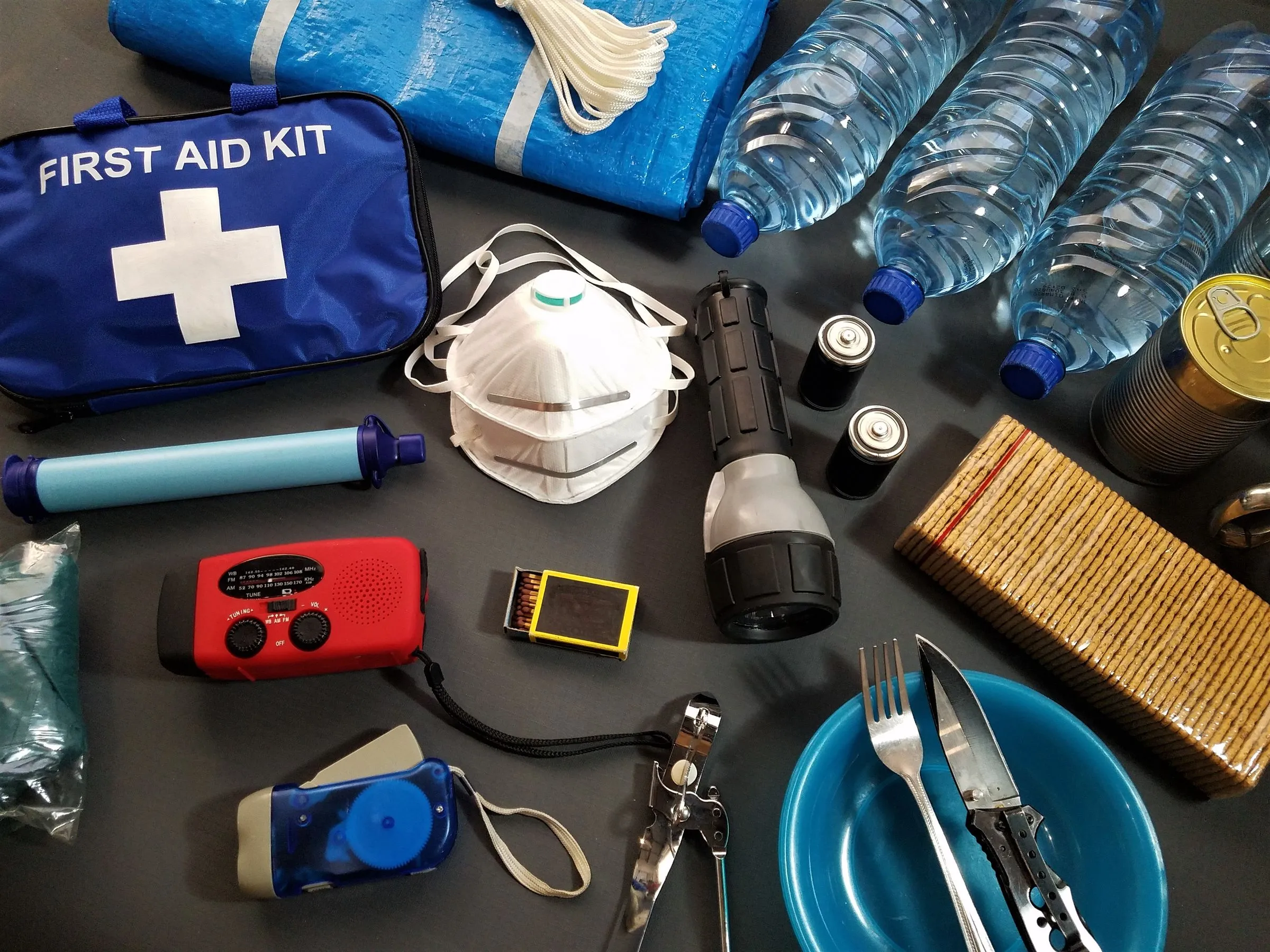
Surviveware Comprehensive First Aid Kit
Why it fits An organized first aid kit may make supplies easier to find; check contents against household needs and replace used items.
Key trade-off Does not include prescription medications or commercial tourniquets (CAT/SOF-T); add personal prescription meds and dedicated arterial tourniquets to designated extra zipper pockets.
Specifications & research
600D water-resistant labeled first aid kit. Source records checked on 2026-11-04. Manufacturer research, not hands-on testing.
- Item Count
- 200 · Source checked 2026-11-04
- Case Material
- 600D water-resistant ripstop polyester case with waterproof inner laminates · Source checked 2026-11-04
- Included Specialty Supplies
- 7.5-inch trauma shears, CPR mask with one-way valve, emergency thermal mylar blanket, splint, triangular bandages · Source checked 2026-11-04
Manufacturer documentation. Confirm exact Surviveware model specifications and household safety limits before buying.
The Room-Temperature Truth: Insulin Does Not Die Instantly
The biggest misconception surrounding insulin is that it spoils within hours of leaving a cold refrigerator.
According to formal guidelines from the U.S. Food and Drug Administration (FDA) and major manufacturers (Eli Lilly, Novo Nordisk, Sanofi):
- The 28-Day Rule: Unopened and in-use vials and cartridges of human insulin and insulin analogs (such as lispro, aspart, glargine, and detemir) can be stored at room temperature—up to 86°F (30°C)—for up to 28 days without losing significant potency.
- Formulation Exceptions: Some newer basal insulins (such as insulin degludec / Tresiba) are certified by the FDA to remain stable at room temperature for up to 56 days, while Toujeo is approved for 42 days.
- The Deadly Sun and Car Threat: What destroys insulin is not room temperature; it is direct heat and ultraviolet light. Leaving insulin on a sunny windowsill, near a heat register, or inside a parked car where temperatures soar past 90°F causes the complex peptide protein chains to break down rapidly. Once denatured, insulin permanently loses its ability to lower blood sugar.
The Freezing Trap: Never Pack Medication Directly on Ice
The most catastrophic mistake people make during a power outage is placing vials or insulin pens directly into a bag of crushed ice or onto a frozen solid gel pack.
Insulin is a water-based protein solution. If it drops below 36°F (2°C) and freezes, microscopic ice crystals expand throughout the solution. This physical crystallization breaks the delicate molecular bonds of the insulin protein. Even after thawing back into liquid, frozen insulin loses substantial potency and can precipitate into microscopic clumps that cause erratic, dangerous blood glucose fluctuations.
The Golden Rule: Never allow insulin, biologics, or liquid medications to touch ice directly.
The Safe Cooler Packing Protocol:
- The Cloth Buffer: Wrap frozen ice packs or gel packs in two layers of thick cotton bath towels or hand cloths.
- The Airspace Layer: Place the towel-wrapped ice packs along the outer edges of a small insulated cooler bag.
- The Medicine Core: Place your medication vials or pens inside a waterproof plastic container (such as a hard plastic food container or travel soap box) lined with a dry washcloth, and position it in the center of the cooler, physically separated from the cold packs.
- Monitor with a Thermometer: Slide a digital refrigerator probe thermometer into the center of the medicine container to confirm the internal temperature stays between 36°F and 46°F (2°C–8°C).
- Never Use Dry Ice: Solid carbon dioxide (-109.3°F) will freeze and destroy all liquid pharmaceuticals immediately.
Refrigerated Medication Thermal Stability Matrix
| Medication Category | Brand Examples | Permitted Room-Temperature Storage | Strict Upper Temp Limit | Freezing Hazard | Discard Trigger |
|---|---|---|---|---|---|
| Rapid-Acting Insulin | Humalog, Novolog, Apidra | 28 Days at room temp | 86°F (30°C) | Permanent Rupture | Cloudy appearance, clumps, or exposed to > 86°F. |
| Long-Acting Basal Insulin | Lantus, Levemir, Basaglar | 28 Days at room temp | 86°F (30°C) | Permanent Rupture | Stringy precipitation or exposed to freezing ice. |
| Ultra-Long Basal Insulin | Tresiba (Degludec), Toujeo | 56 Days (Tresiba), 42 Days (Toujeo) | 86°F (30°C) | Permanent Rupture | Discard past manufacturer room-temperature day limit. |
| GLP-1 Receptor Agonists | Ozempic, Trulicity, Mounjaro | 56 Days (Ozempic), 14 Days (Trulicity) | 86°F (30°C) | Permanent Rupture | Particulate matter visible; do not freeze. |
| Biologic Injections (TNF Inhibitors) | Humira, Enbrel | 14 Days at room temp | 77°F (25°C) | Permanent Rupture | Must be used within 14 days once brought to room temp. |
| Refrigerated Eye Drops | Latanoprost (Xalatan) | 6 Weeks once opened | 77°F (25°C) | Moderate | Discard after 6 weeks at room temp. |
| Reconstituted Antibiotics | Amoxicillin liquid suspension | 14 Days refrigerated (Degrades at room temp) | Warm room degrades potency | Low | Becomes ineffective; consult pharmacist for refill. |
Evaporative Cooling Cases: The Electricity-Free Alternative
If you live in an arid or semi-arid climate (such as the American Southwest or interior valleys), standard ice coolers can be cumbersome during multi-day outages.
Consider keeping an evaporative cooling travel pouch (such as a Frio wallet) with your emergency diabetes supplies:
- How It Works: The pouch contains specialized polyacrylamide crystals that absorb water and expand into a gel. As water slowly evaporates through the breathable outer cambrelle cover, it draws thermal energy away from the interior pouch via the latent heat of vaporization.
- Performance: It keeps insulin comfortably below 78°F (26°C) for up to 48 hours in hot, dry air without requiring electricity, ice, or refrigeration. To recharge, simply soak the inner wallet in tap water for 5 to 10 minutes.
- Limitation: Evaporative cooling requires a humidity gradient; it is less effective in humid subtropical climates (like coastal Florida or the Gulf Coast) where ambient air is already saturated with water vapor.
When to Seek Urgent Pharmacist Intervention
Do not guess about medication safety when your health is on the line. Contact your pharmacist or diabetes educator immediately if:
- Physical Appearance Changes: Clear insulin should look completely crystal clear, like clean water. If your insulin appears cloudy, discolored, or contains floating flakes, clumps, or frost-like crystalline deposits on the glass walls, the protein has denatured. Do not inject it.
- Unexplained Hyperglycemia: If you inject your normal dose of insulin during an outage and your blood sugar remains stubbornly elevated despite proper dietary control, your medication has lost potency from heat exposure. Switch to a fresh backup vial immediately.
- Emergency Refill Laws (Kevin’s Law): Most US states have enacted emergency prescription refill legislation (often called Kevin’s Law). In a declared emergency or natural disaster, pharmacists are legally authorized to dispense an emergency 30-day supply of insulin, syringes, and testing supplies without waiting for physician pre-authorization.
Printable Refrigerated Medication Continuity Checklist
- Assemble a medical go-bag: Store your primary insulin pens, vials, syringes, pen needles, alcohol swabs, and blood sugar meter in one portable case.
- Procure dedicated cooling cases: Keep two reusable gel packs and a specialized insulated medication travel pouch stored in your kitchen.
- Stock emergency carbohydrates: Keep at least four tubes of glucose gel, a bottle of glucose tablets, and juice boxes in your emergency kit.
- Document prescription details: Keep a laminated card with your exact medication names, daily dosages, prescribing physician’s phone number, and pharmacy contact.
- Never freeze on ice: Always insulate cold gel packs with cotton cloth; verify vials never touch bare ice cubes.
- Monitor blood sugar frequently: Test blood glucose every 3 to 4 hours during an outage to catch insulin degradation early.
- Check expiration dates: Rotate stored backup insulin so your emergency supply is always within its valid calendar date.
Frequently Asked Questions
Can you put insulin back in the refrigerator after it reaches room temperature?
If unopened insulin has been kept at room temperature (below 86°F), you can return it to the refrigerator. However, its 28-day room-temperature lifespan does not “reset” by putting it back into the cold. Once insulin has been exposed to room temperature, you must mark the date on the box and use it within 28 days, regardless of whether it is refrigerated again.
What should you do if your insulin froze during a winter power outage?
If your insulin froze solid or contains floating ice crystals, you must discard it. Freezing breaks down the molecular structure of the insulin protein permanently. Injecting previously frozen insulin can cause unpredictable absorption, leading to dangerous hyperglycemia or sudden hypoglycemic episodes. Contact your local pharmacy for an emergency replacement.
Can you store insulin in a thermos during an evacuation?
Yes. A wide-mouth vacuum-insulated stainless steel food thermos makes an outstanding emergency transport container. Wrap your insulin pens or vials in a soft cloth or bubble wrap, place them inside the thermos alongside a small, chilled gel pack wrapped in a cloth, and seal the lid. The vacuum insulation blocks external ambient heat for 24 to 36 hours.