In this guide Jump to a section
When an electric power outage disables the kitchen range and microwave, the desire for a hot cup of coffee or a warm pot of soup can become overwhelming. Homeowners frequently dig into camping bins, pull out a green two-burner propane stove, and set it on the kitchen counter or dining room table.
This single decision kills dozens of Americans every year.
Camping stoves, backpacking burners, and portable outdoor cookers are engineered under completely different regulatory standards than residential kitchen ranges. Operating a camping stove indoors creates an immediate, silent hazard: carbon monoxide (CO) poisoning.
Understanding how different fuel types behave, why indoor combustion turns lethal, and how to configure a safe outdoor cooking station ensures you can enjoy hot meals without risking your family’s lives.
Assess Household Demographics First
Before selecting an emergency cooking setup, evaluate your living environment and occupants:
- Apartment Renters and High-Rise Dwellers: Most residential leases and municipal fire codes strictly forbid storing pressurized propane cylinders or operating fuel burners on apartment balconies, fire escapes, or breezeways. In an apartment, your primary emergency path should be ready-to-eat no-cook food, supplemented only by commercial canned chafing fuel if permitted.
- Children and Household Pets: Open flames on camping stoves lack the insulated safety barriers found on household kitchen appliances. A running dog bumping into a folding camp table can knock boiling water onto bystanders. Keep a 5-foot perimeter clear of kids and pets.
- Occupants with Respiratory Vulnerabilities: Individuals with asthma or heart conditions are especially sensitive to trace carbon monoxide and nitrogen dioxide emissions. Never compromise on outdoor ventilation.
Camp Chef Everest 2X 2-Burner Propane Stove
- Ignition Type
- Matchless rotary piezo igniter
Why it fits A propane camp stove can support outdoor cooking; follow its instructions and never use it indoors.
Key trade-off For outdoor use only; combustion produces carbon monoxide and open flames that are dangerous in enclosed unventilated living spaces.
Specifications & research
High-output 20,000 BTU/hr dual-burner propane stove. Source records checked on 2026-11-04. Manufacturer research, not hands-on testing.
- Total Output Btu
- 40,000 · Source checked 2026-11-04
- Ignition Type
- Matchless rotary piezo igniter · Source checked 2026-11-04
- Grate And Cookware Area
- Full-size nickel-coated steel grate (fits two 10-inch to 12-inch skillets simultaneously) · Source checked 2026-11-04
Manufacturer documentation. Confirm exact Camp Chef model specifications and household safety limits before buying.
The Chemistry of Carbon Monoxide Infiltration
Why can you cook on a residential natural gas stove indoors, but not on a portable camping stove?
- Combustion Air Ratios: Residential gas ranges are precision-tuned to mix high volumes of secondary air with fuel to achieve complete stoichiometric combustion:
Fuel (CH4) + 2O2 → CO2 + 2H2O (Clean exhaust) - Incomplete Combustion in Camp Stoves: Portable camp stoves and backpacking burners are engineered for compact outdoor wind resistance, not air-balance perfection. Under cold temperatures, reduced burner pressure, or when large stockpots rest directly over the flame, combustion is quenched, resulting in incomplete combustion:
Fuel + Insufficient O2 → Carbon Monoxide (CO) + Soot + Unburned Hydrocarbons - The Silent Asphyxiant: Carbon monoxide is completely odorless, tasteless, and invisible. When inhaled, CO molecules bond to blood hemoglobin with an affinity 200 times stronger than oxygen, forming carboxyhemoglobin. This blocks the blood from carrying oxygen to the brain and heart, causing headache, nausea, weakness, coma, and death.
- The Window Fallacy: Cracking a kitchen window two inches does not create sufficient convective exchange to dilute lethal concentrations of CO generated by a 20,000-BTU dual-burner camp stove.
Portable Cooking Fuel Comparison Matrix
Each camping fuel features distinct boiling points, container pressure dynamics, and temperature limitations.
| Fuel Type | Chemical Composition | Boiling Point (Cold Limit) | Canister Type & Pressure | Indoor Rating | Best Outage Application |
|---|---|---|---|---|---|
| Propane (LPG) | Propane (C3H8) | -44°F (-42°C) | Heavy steel 1-lb cylinders (approx. 120 PSI) | Outdoor Only | Best all-around winter fuel; reliable down to sub-zero temperatures. |
| Butane | n-Butane (C4H10) | 31°F (-0.5°C) | Thin aerosol cans (approx. 30 PSI) | Outdoor Only | Ineffective below 32°F; ideal for mild-weather patio tabletop cooking. |
| Isobutane / Propane Blend | Isobutane (C4H10) + Propane | 11°F (-11.7°C) | Lightweight threaded backpacking canisters | Outdoor Only | Excellent for compact, rapid water boiling; struggles below 15°F. |
| White Gas (Naphtha) | Liquid petroleum distillate | Liquid at room temp | Refillable fuel bottles (manual hand pump) | Outdoor Only | Extreme sub-zero reliability; high flare-up risk during priming. |
| Canned Ethanol / Methanol Gel | Denatured alcohol gel (Sterno) | Liquid / gel state | Low-pressure metal chafing tins | Approved for Ventilated Indoors | Gentle food warming and simmering; cannot boil large pots of water. |
The Outdoor Cooking Perimeter Protocol
To cook meals safely using camping stoves during a grid failure, set up an outdoor station that mitigates wind, fire, and fumes:
- The 10-Foot Clearance Perimeter: Position your camping stove on an open deck, driveway, or patio at least 10 feet away from exterior walls, windows, doors, and wooden railings. Never place a stove beneath roof overhangs or low wooden soffits where rising heat can ignite attic framing.
- Stable, Noncombustible Work Surface: Set the stove on a sturdy metal folding table or level concrete patio. Avoid flimsy plastic picnic tables that can warp or melt from radiant burner heat.
- Deploy Wind Screens: Winter winds blow burner flames sideways, doubling boil times and wasting fuel. Use a three-sided folding aluminum windscreen around the burner, leaving adequate top clearance for ventilation.
- Never Leave a Lit Stove Unattended: Always supervise active flames. Keep a household ABC dry-chemical fire extinguisher or a box of baking soda within arm’s reach.
What You Can and Cannot Safely Use Indoors
| Cooking Equipment | Safe Indoors? | Mandatory Safety Conditions |
|---|---|---|
| Natural Gas Kitchen Cooktop | YES (With Conditions) | Only if the owner’s manual permits manual match lighting during outages. Crack a nearby window and ensure the kitchen range hood vents to the outside. Never use cooktop burners to heat the home. |
| Canned Chafing Fuel (Sterno) | YES (With Conditions) | Permitted for warming food in buffet chafing dishes in well-ventilated rooms. Keep away from tablecloths and paper napkins. |
| Propane / Butane Camp Stoves | NO | Emits high concentrations of carbon monoxide; strictly for outdoor open-air use. |
| Backpacking Canister Stoves | NO | Narrow flame bases create high tip-over risks and dangerous CO concentrations in enclosed spaces. |
| Charcoal Grills or Hibachis | ABSOLUTELY NO | Charcoal produces lethal, massive volumes of CO. Bringing charcoal inside a home or garage is almost universally fatal. |
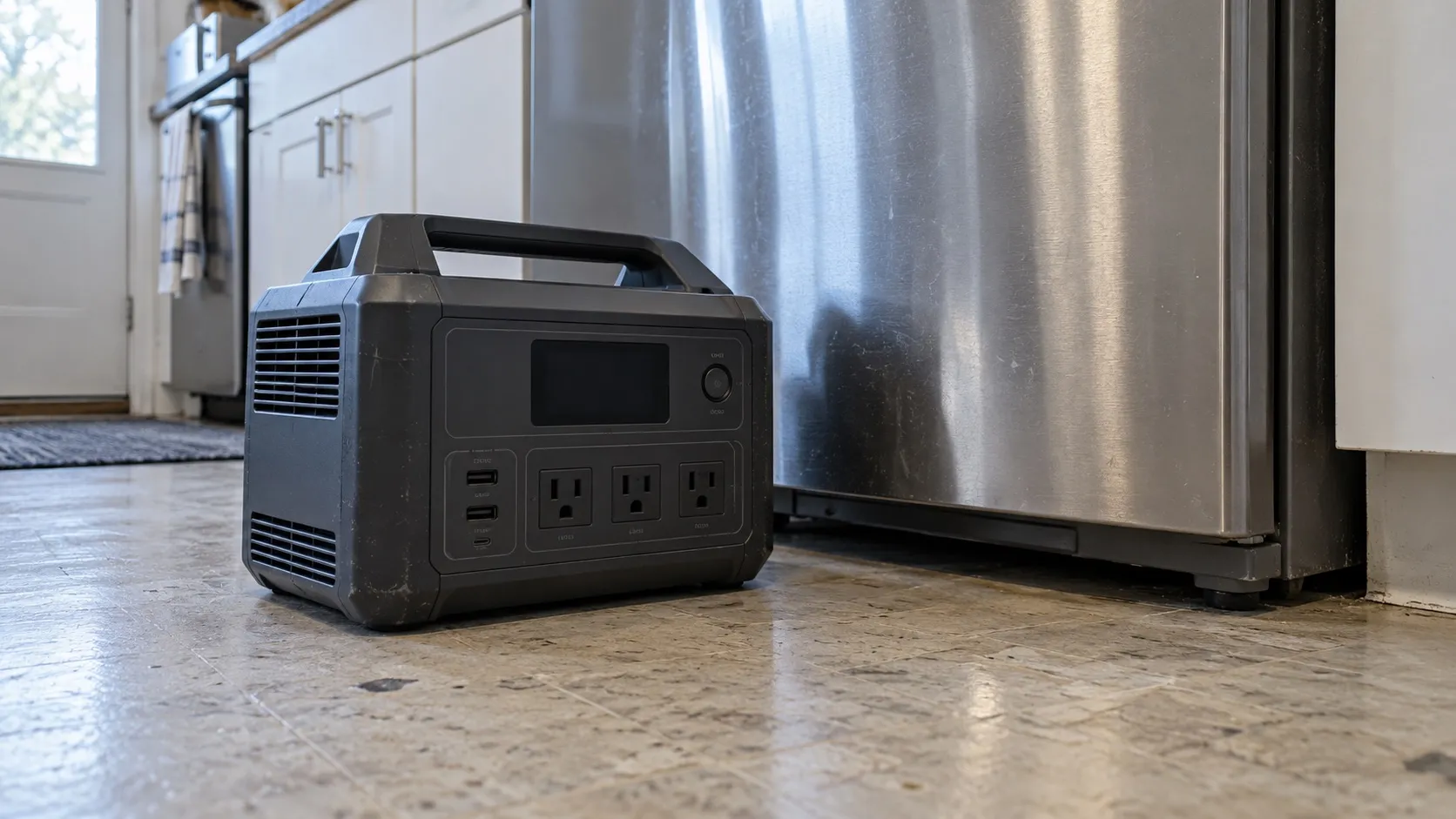
| Electric Skillet via Power Station | YES | Zero combustion. Completely safe indoors if your portable battery station supports continuous 1,200W–1,500W output. |
Printable Camp Stove Fuel and Operation Checklist
- Fuel inventory check: Store at least four 1-lb propane cylinders in a well-ventilated outdoor shed or garage cabinet (never in living areas).
- Inspect fuel valves and O-rings: Check rubber O-rings on the stove regulator arm for cracks or hardening before threading onto cylinders.
- Verify outdoor clearance: Confirm the stove sits at least 10 feet away from house walls, vinyl siding, and doors.
- Level the table: Ensure the stove sits on a flat, non-flammable surface free of dry leaves or debris.
- Check flame color: A properly tuned stove burns with a steady, clean blue flame. A lazy, yellow flame indicates incomplete combustion and excess soot.
- Cool down before packing: Allow burners and pot grates to cool completely before detaching gas cylinders.
- Active CO alarms: Ensure working, battery-operated carbon monoxide alarms are installed on every level of your home.
Frequently Asked Questions
Can you use a camp stove in a garage with the garage door open?
No. Fire marshals and safety agencies strictly advise against operating fuel-burning stoves inside garages, even with the main door open. Swirling wind patterns create negative pressure drafts that draw carbon monoxide and exhaust gases into wall cavities, attic spaces, and through interior access doors into the living quarters. Always cook fully outdoors on an open patio or driveway.
Why won’t my butane camping stove work in freezing winter weather?
Standard butane has a boiling point of 31°F (-0.5°C). Below freezing, liquid butane cannot vaporize into a gas inside its canister, causing burner flame sputtering and complete failure. For winter outages, choose propane stoves; propane boils at -44°F (-42°C) and maintains vigorous gas pressure in deep sub-zero conditions.
Can you run an electric induction cooktop off a portable power station?
Yes, and it is the safest indoor cooking method during an outage because it involves zero combustion. However, induction burners draw 1,200 to 1,800 watts continuously. You will need a large portable power station with at least 1,500Wh of battery capacity and a 2,000W continuous inverter to boil several pots of water.