Dry Ice for a Freezer Power Outage: Decide Before You Buy
Compare dry ice with ordinary ice and other cold-storage options, check handling and ventilation limits, and prepare a supplier-and-appliance checklist.
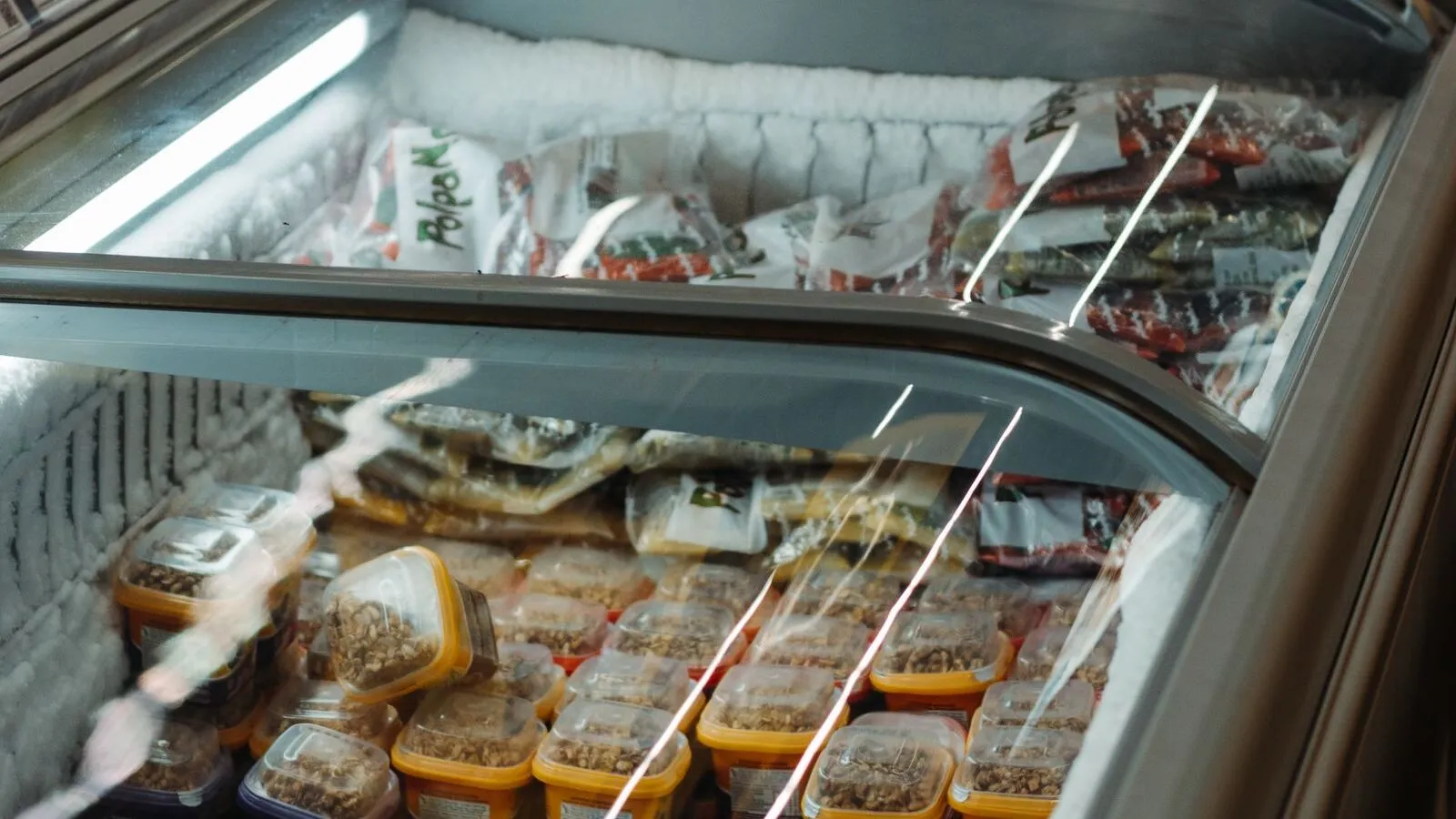
Dry ice is worth considering only when you can manage the whole cold-storage arrangement safely. A store having some available does not tell you whether your freezer, vehicle, room, or household is ready to use it.
It can keep frozen food cold without electricity. It also adds a hazard that ordinary water ice does not: as solid carbon dioxide warms, it becomes gas. The University of Florida’s household disaster guidance calls for ventilation, protection from skin contact, and keeping freezer vent openings clear. Resolving those conditions comes before choosing a quantity.
Compare the cold-storage paths
| Option | What it can help with | Constraint to resolve |
|---|---|---|
| An operating freezer at another safe location | Continued frozen storage | Safe access, transport, capacity, and confirmation that the destination is operating |
| Ordinary ice or frozen packs in a suitable cooler | A monitored refrigerated-food fallback | Ice supply, drainage and food protection, thermometer use, and maintaining the required cold conditions |
| Dry ice used under supplier and appliance instructions | Additional cooling for a compatible frozen-food arrangement | Carbon-dioxide ventilation, contact protection, equipment compatibility, transport, and later food checks |
None of these choices repairs food that was already mishandled. The practical comparison is which method you can manage and verify—not which feels coldest when you open the lid. The cooler-packing guide covers ordinary ice and perishable food; the outage timeline helps organize when temperature and food-category decisions become necessary.
Check the freezer and the room together
Find the exact appliance model and its instructions. Ask the manufacturer whether dry ice is permitted, what separation or placement it requires, and whether materials or components could be damaged. A general household article cannot supply those model-specific answers.
Ask the supplier for written handling, storage, and transport instructions. Those instructions, or a quantity estimate, do not establish that a particular room has adequate ventilation. Do not treat an open freezer lid, an open window, or a running fan as proof that the arrangement is suitable. If the room’s ventilation and the appliance arrangement cannot be confirmed as suitable, choose another cold-storage method. A closed room can accumulate gas even though the freezer itself is not airtight.
CDC’s dry-ice safety sheet identifies both carbon-dioxide accumulation and pressure buildup as hazards. Dry ice must not be placed in a sealed container. Closing a compatible appliance as its instructions require is a different question from sealing dry ice in an airtight box; follow the appliance’s directions without making the container airtight. The CDC sheet explains handling hazards; it does not approve any household room or freezer.
Children, pets, and anyone who may mistake the material for ordinary ice need to be kept away. Do not put it in drinks, taste it, or leave it where someone might handle it without knowing what it is.
Arrange handling and transport before collection
Dry ice can injure skin on contact. Obtain the supplier’s written directions for the required insulated gloves, tools, container, and eye protection. Thin disposable food gloves are not a substitute for the specified cold protection. Do not handle it with bare hands or break it apart as an improvised household task.
Transport deserves its own decision. A CDC report describes loss of consciousness during a vehicle exposure, demonstrating why an ordinary trip home can become hazardous. That report is historical evidence of the risk, not a recipe for a safe amount in a car.
Ask the supplier whether it can provide an appropriate delivery option. If collecting it, obtain instructions for the particular container, vehicle, ventilation, journey, and unloading arrangement. If you cannot meet those instructions, do not collect it. Never leave dry ice in an enclosed occupied vehicle or improvise a sealed transport container.
If someone feels unwell near stored dry ice, leave the area and obtain emergency help. Do not enter a potentially contaminated confined space to investigate or attempt a rescue. Saving frozen food can wait.
Why there is no universal pounds-per-freezer answer
Freezer volume is only one part of the question. Food load, starting temperatures, insulation, room conditions, door opening, the quantity and form supplied, and the approved placement all affect the outcome. A published example cannot guarantee the same duration in your appliance.
Give the supplier the appliance model and usable volume, whether it is full or partly filled, and the arrangement approved by the manufacturer. Ask what assumptions support its estimate and when you need to reassess the food. Do not stack extra dry ice into an uncertain setup because the outage forecast has become longer.
Avoid making a cold-storage plan that depends on repeated trips during dangerous weather. A simpler supply of shelf-stable food, a safe relocation, or accepting food loss can be a better household decision than extending an unsafe arrangement.
Keep temperature evidence separate from the purchase
A receipt for dry ice records what you bought; it does not record the food’s condition. Keep the freezer closed as much as its approved procedure permits and retain any temperature evidence from instruments intended for the conditions. Extremely cold placement can exceed an ordinary sensor’s permitted range, so check its instructions too.
After an interruption, use FoodSafety.gov’s refrigerator and frozen-food charts for the actual item. Temperature, remaining ice crystals where applicable, contamination, and food category matter. Do not taste food to test safety, and do not assume that every partly thawed item has the same refreezing rule.
The refreezing guide explains that distinction. Adding a colder material later cannot reconstruct an unknown temperature history.
Dry-ice decision checklist
- The exact freezer’s instructions permit the intended use and explain placement.
- The intended room and appliance arrangement are suitable; supplier handling advice alone has not been treated as a ventilation assessment.
- Supplier instructions cover the container and transport arrangement, and those conditions can be met.
- Required protective equipment and safe handling assistance are available.
- Children and pets cannot reach the material or its container.
- Quantity and duration estimates have stated assumptions rather than a guarantee.
- A suitable temperature-monitoring method and food-assessment plan are ready.
- Supplier instructions cover unused material and disposal; no sealed container, drain, sink, or toilet is used for disposal.
- A simpler fallback is available if any condition cannot be met.
Put the supplier contact and appliance instructions with this checklist. An unanswered safety condition is a reason to choose another cold-storage path, not a problem to solve after the dry ice is already in the vehicle.