Does Bleach Expire? Check the Product Before You Rely on It
Decode a bleach date only when its manufacturer documents the code, then check that product’s storage guidance and label for the job.
In this guideJump to a section
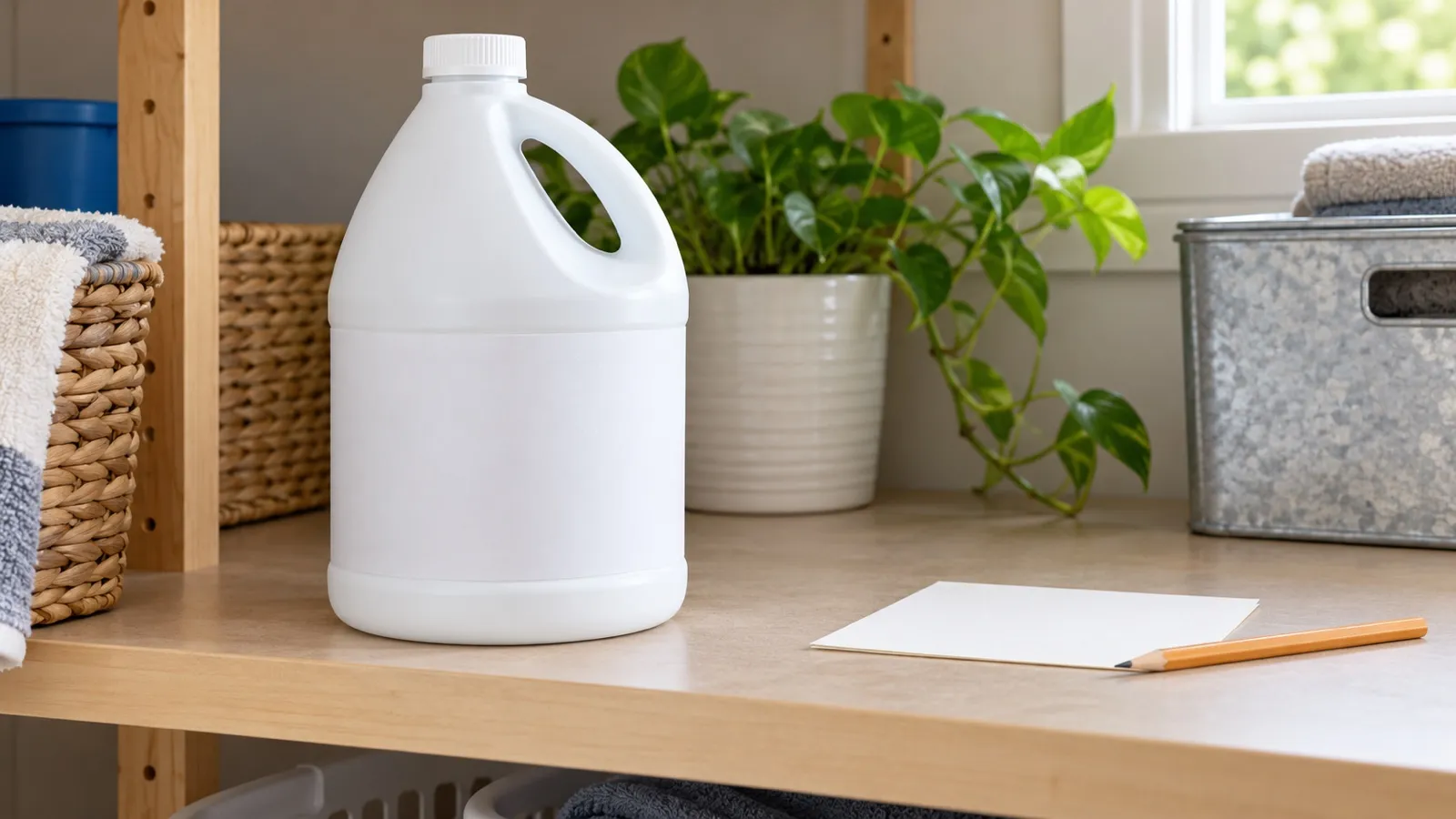
Bleach loses strength with age, so a bottle kept for “just in case” needs an age check before you rely on it. Start with the full product name: a manufacture-date code and the maker’s storage guidance are more useful than guessing from the smell or the day you bought it.
A worked Clorox date-code example
Clorox’s production-code guide gives this example: A82223411: 31CR3.
| Code portion in this example | Meaning |
|---|---|
A8 | Plant identifier; skip it when extracting the date. |
22 | The last two digits of the manufacture year: 2022. |
234 | Day 234 of that year: August 22. |
| Remaining characters | Not needed for the date in Clorox’s example. |
This decoder belongs to Clorox’s documented format. If another bottle has a different stamp, use that maker’s instructions. A rubbed-off or incomplete code is a reason to contact the manufacturer, not to infer a date from package style.
What the one-year guidance means
Clorox says its named Disinfecting Bleach lasts up to one year when stored away from heat and direct sunlight. Its FAQ applies that period to opened and unopened bottles. The clock is tied to manufacture, so buying an older bottle does not start a fresh year.
For that product, Clorox says out-of-date bleach should not be used for EPA-registered disinfecting or sanitizing applications. Replace it with a suitable fresh product when you need those uses. Other formulations need their own manufacturer’s guidance. Neither a decoded date nor normal appearance measures the active concentration or establishes a bottle’s storage history.
Keep concentrated bleach and a prepared dilution separate in your notes. CDC says a diluted bleach solution becomes less effective after more than 24 hours and advises making a new solution daily. That is guidance for the prepared household surface-disinfection solution, not the shelf life of the original bottle.
Age is only one part of choosing a product
Read the exact current label for the intended job and its precautions. Surface cleaning, disinfection and drinking-water treatment are different tasks. Never mix bleach with another cleaner or disinfectant; CDC warns that dangerous vapors can result. Do not compensate for uncertain age by increasing the amount.
For emergency-water planning, CDC recommends storing unscented liquid household chlorine bleach labeled 5%–9% sodium hypochlorite and provides separate water-treatment instructions. That recommendation does not approve an old bottle or make a surface-cleaning recipe suitable for drinking water.
Bleach product record
Use a short record for the bottle you actually have:
| Check | Record |
|---|---|
| Identity | Brand, full product name and labeled active ingredient/concentration |
| Date | Exact code, official decoder and manufacture date if confirmed |
| Storage | Known heat/sun exposure or “unknown” |
| Intended use | The task and whether the current label permits it |
| Decision | Suitable within the maker’s guidance, replace, or ask the maker to resolve uncertainty |
Keep the record with your supplies; do not write a universal “expires after X” rule across different products. If your next task is emergency drinking-water preparation, use the water storage and safety guide and current public-health instructions.