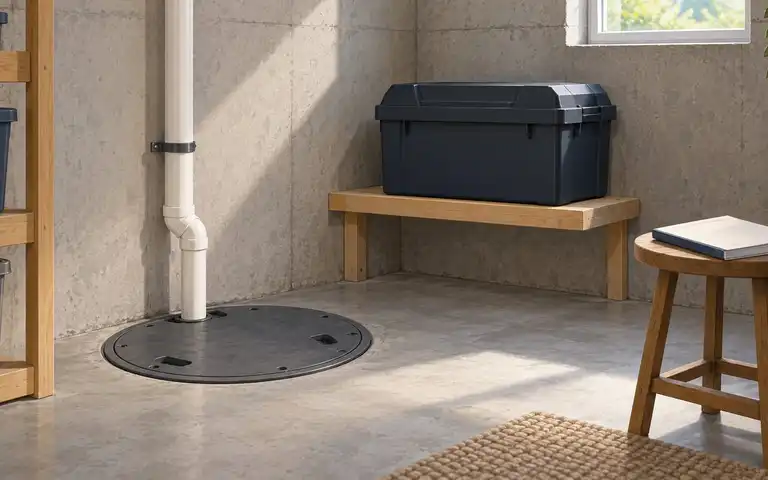
A sump pump can run more often during a thaw, while snow or ice can obstruct an outdoor discharge. From a safe location, look for a covered outlet, visible damage, water collecting near the foundation, or an alarm. Do not assume a pump or fitting can keep up with inflow. If the pump runs continuously, the basin rises, or you suspect an ice blockage, contact a qualified plumber and follow the pump manual.
Why a discharge may be obstructed
Snow, ice, leaves, a damaged outlet, a sagging section that retains water, or a frozen downstream line can interfere with discharge. Which condition applies is not always visible from the outlet. The article’s former exact freeze-time estimates and claim that a pipe will freeze below a particular temperature were not supported by the sources reviewed, so temperature alone is not a reliable diagnosis.
How an exterior vented freeze relief fitting operates
ILLUSTRATEDVented relief fittings are one possible measure
Basement Systems describes its IceGuard fitting as providing perforations for water to escape if the downstream line is blocked. That is a manufacturer description, not independent confirmation for every installation. If the downstream line is obstructed, a product of this type may provide another route for water to leave the pipe. That route can discharge near the building, where water may collect or refreeze. It does not clear the obstruction, guarantee pump operation, or guarantee a dry basement. Product instructions, pump compatibility, site grade, and the lawful discharge location matter; ask a plumber whether the fitting suits the existing system.
Compare the tradeoffs before changing a line
| Option to discuss | What it may address | Important limit |
|---|---|---|
| Keep the visible outlet clear | Snow, leaves, or debris covering the outlet | Does not diagnose a blockage farther down the line or a pump fault. |
| Vented relief fitting | A possible alternate discharge path near the wall if a downstream line is blocked | Water may discharge beside the foundation; performance and suitability depend on product and site. |
| Heat cable or other freeze protection | A cold section of pipe, when the product and installation are appropriate | Requires power and must follow manufacturer and electrical requirements; it cannot help during an outage. |
| Reroute, bury, or resize a line | A layout that repeatedly holds water or freezes | Excavation, pipe materials, slope, frost depth, discharge destination, and permits are site- and code-dependent professional work. |
| Seasonal surface discharge | A temporary arrangement where a professional confirms it is safe and permitted | The route must not send water toward the foundation, another property, a public path, or a place where it creates an ice hazard. |
There is no universal pipe diameter, slope, burial depth, fitting, or success rate for every property. NDSU Extension’s flood-preparation checklist highlights the discharge destination and the risk of water recirculating toward the foundation. Ask a qualified local plumber and the responsible authority to confirm the route and applicable requirements for this address.
Seasonal check and a safe handoff
Before cold weather and after a major snow or thaw, inspect from the ground:
Seasonal sump discharge inspection
STEP-BY-STEP-
Inspect daylight outlet for snow drifts, ice crusts, leaves, or standing water.
-
Listen for rapid pump cycling or unusual motor hum without approaching energized water.
-
Record pump model, relief fitting brand, and exterior exit slope from owner manuals.
-
Call a licensed plumber if frozen or obstructed; never drill, disconnect, or heat pipes DIY.
-
Stop: If water enters near electrical equipment, evacuate and follow emergency protocols.
If water is entering the basement, move away from standing water around electrical equipment and follow local emergency guidance. Do not enter a flooded area to inspect a pump.