Ash from a distant vegetation fire and residue from burned buildings do not carry identical risks. If a house, vehicle, electrical cabinet or industrial material burned nearby, ash may contain other hazardous substances. This guide helps decide when a household can address light dust after clearance and when a specialized response is necessary.
This is not a post-fire reentry authorization. Start with the wildfire home preparedness guide for orders and evacuation, and the home inventory and emergency documents checklist for privately recording damage.
Separate authorized light ash from hazardous debris
| What you find | Why it matters | Appropriate decision |
|---|---|---|
| Officials have not cleared reentry | Fire, electrical and structural hazards may remain | Stay away and follow authorities |
| Debris from burned buildings or vehicles | May contain harmful substances | Ask fire/environmental agency about professional removal |
| Light settled ash on stable, accessible surfaces | Moving it may create inhalable dust | Check local rules and use qualified low-dust methods if appropriate |
| Ash near vents or duct outlets | Distribution throughout home may be possible | Request HVAC assessment where necessary |
| Residents with heart or lung disease, older adults, or pregnant people | EPA identifies higher risk during ash cleanup | They should not participate in cleanup |
| Children | Ash exposure can harm them | Keep them away from ash-contaminated areas until cleanup is complete |
| Wet electrical parts, gas odor or unstable roof | Immediate danger independent of ash | Leave and contact qualified emergency/utility personnel |
The EPA wildfire ash guidance says ash from burned structures generally contains more harmful chemicals than forest ash. Children should not be near ash-contaminated sites until cleanup is complete. People with heart or lung disease, older adults, and pregnant people should not participate in cleanup.
Avoid making fine ash airborne
For permitted light-ash work after a safe return, EPA advises avoiding dry sweeping and leaf blowing. Use a damp cloth or wet mop on lightly dusted surfaces and use as little water as possible. A HEPA vacuum is preferred if vacuuming is needed. If a typical household or shop vacuum is unavoidable, EPA says to wear a respirator, air out the space, and use an air cleaner or HVAC filter while vacuuming because the vacuum may release contaminants back into the air. Follow local instructions and stop if the ash or site may be hazardous.
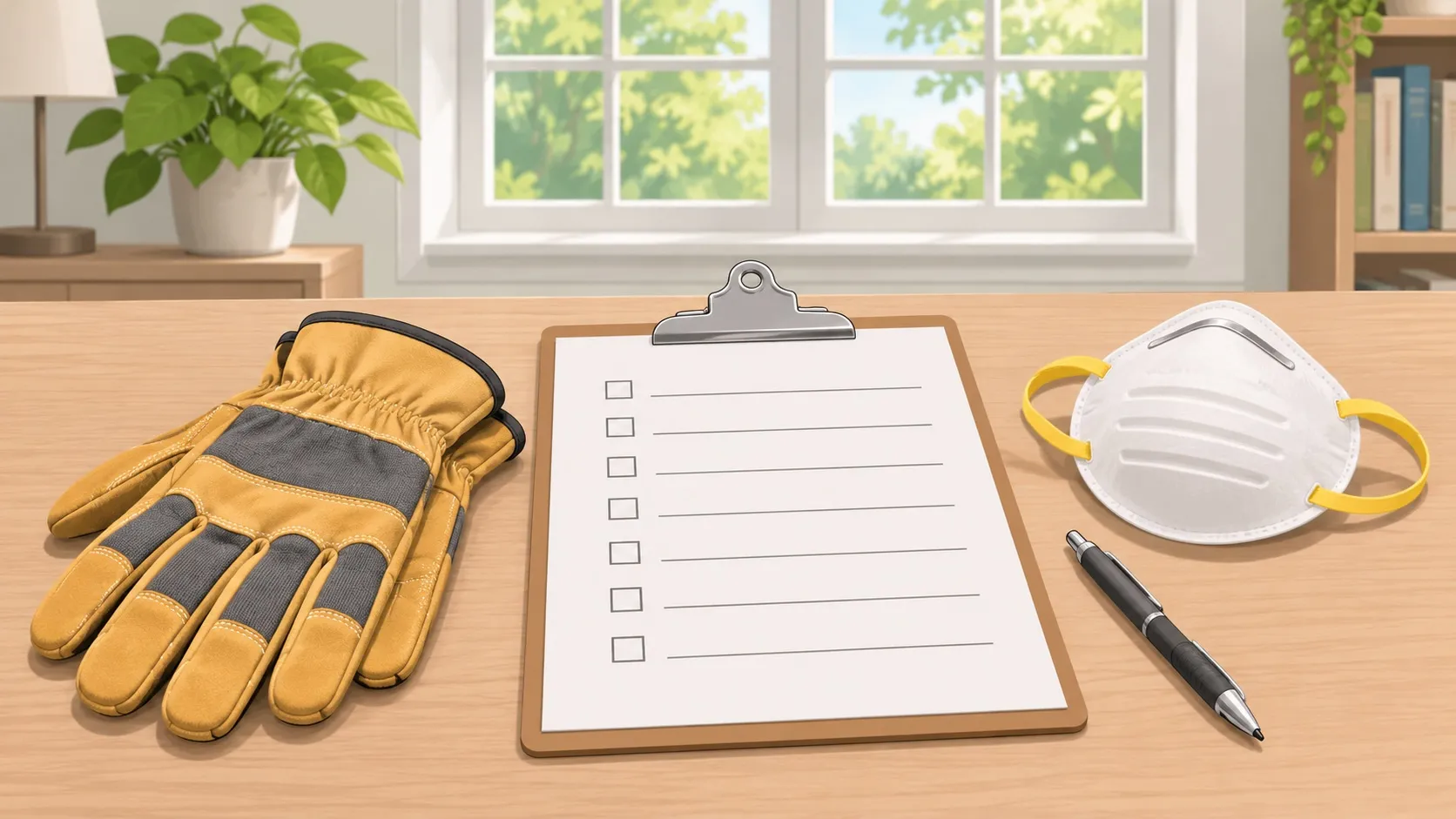
For any cleanup authorities consider suitable for household members, follow EPA’s current protective guidance, including gloves, protective clothing, goggles, and a correctly fitted NIOSH-approved N95 or P100 respirator. Respirators do not make a hazardous site safe for untrained residents. People with heart or lung disease, older adults, and pregnant people should not participate; keep children away from contaminated areas until cleanup is complete.
Keep personal items and drains protected
Avoid tracking residue into clean rooms, cars, schools or workplaces. Contaminated footwear and clothing should be handled according to local instructions. Do not wash ash into storm drains or mix unknown fire debris with ordinary household garbage without checking local waste authority requirements.
If a building was damaged, photographed objects may need insurance assessment before removal. Get photographs only from an authorized safe position; no claim evidence is worth entering an unsafe site.
Escalate instead of guessing about contamination
Ash color, smell and texture cannot verify whether metals, asbestos or chemical residues are present. Ask local environmental/fire agencies whether the area requires hazardous-waste screening, professional removal, restrictions on garden use or a particular disposal route. If the HVAC system is affected, obtain a qualified inspection before circulating unknown contaminants.
CDC’s disaster-return guidance requires an appropriate safe return and cautions against damaged buildings and wet electrical systems. A closed evacuation zone overrides a cleaning plan.
Wildfire ash cleanup decision record
| Question | Verified source, contact and date | Decision |
|---|---|---|
| Reentry and property safety confirmed? | ||
| Residue from natural vegetation or built materials? | ||
| Vulnerable occupants kept away? | ||
| Low-dust equipment and authorized disposal known? | ||
| Professional assessment requested where uncertain? |
Next action: establish whether officials have cleared the site and whether the material is light ash or fire debris. If unsure, do not disturb it.
Is a normal vacuum enough for wildfire ash?
Prefer a HEPA vacuum. EPA’s June 2026 ash guidance says that if a typical household or shop vacuum is unavoidable, wear a respirator, air out the space, and use an air cleaner or HVAC filter while vacuuming. Do not vacuum if authorities or a qualified cleanup professional say the site or ash is hazardous; follow local instructions.