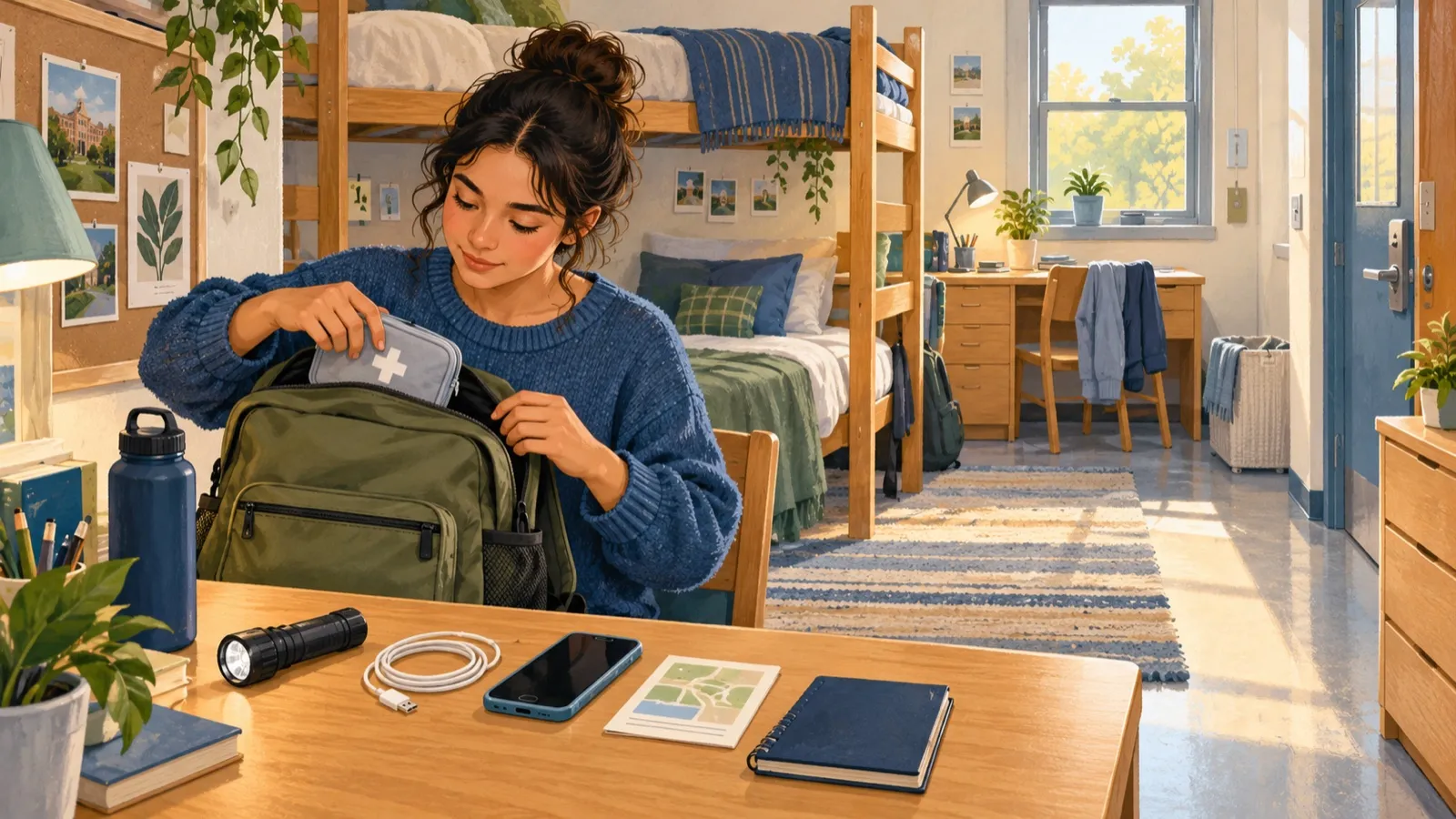
A college dorm kit must fit a compact room shared by roommates while strictly complying with stringent campus fire and housing regulations. Typical dorm rooms measure approximately 10 by 12 feet, leaving minimal floor space for bulky emergency gear. Before buying or packing anything, read the current housing handbook and ask housing staff what is permitted in your specific building. A general home checklist cannot tell you whether a cooking device, lithium power bank, medicine, or storage container is allowed.
The U.S. Fire Administration’s college fire-safety guidance emphasizes cooking only in designated kitchen areas, avoiding overloaded electrical strips, and taking all building alarms seriously.
Get dorm rules before packing
Email or call the housing office before move-in. Ask for current written guidance and record where policies live:
- Which cooking appliances, candles, uncertified power strips, extension cords, and high-capacity lithium batteries are prohibited?
- What may be stored under a bed, in a closet, or in shared micro-spaces without blocking emergency egress?
- How are students notified about fire alarms, severe weather warnings, building maintenance closures, and utility interruptions?
- Where are assigned building exits and exterior emergency assembly points located?
- Who should residents contact about broken alarms, locked exit doors, or accessibility needs?
Worked Battery Capacity and Power Sizing Calculation
When selecting portable electronic backup for a dorm room, students must adhere to strict campus limits on lithium-ion batteries (typically capped under 100 Watt-hours per battery pack):
- Target Device: Smartphone requiring 15 Watt-hours per full charge.
- Power Bank Capacity: 20,000 milliamp-hours at 3.7 Volts equals 74 Watt-hours.
- Usable Energy after Inverter/Conversion Loss (85 percent efficiency): 74 Wh × 0.85 = 62.9 Watt-hours.
- Total Full Phone Charges Available: 62.9 Wh ÷ 15 Wh per charge equals approximately 4.1 full charges, providing reliable communication during a multi-hour campus power outage while staying safely below the 100Wh dormitory regulatory limit.
Pack one small, room-safe layer
Once you know room rules, choose items that solve real needs while fitting shared spaces:
| Keep accessible | Check before storing | Who Should Skip It / Fails When |
|---|---|---|
| Personal medicine and prescription records | Temperature-sensitive drugs requiring refrigeration | Skip if prescription needs professional cold storage on campus. |
| Compact headlamp and approved power bank under 100Wh | Battery charging and uncertified multi-plug adapters | Fails when using prohibited daisy-chained extension cords. |
| Water bottle and shelf-stable snacks | Roommate shared refrigerator space and dietary limits | Fails when food storage attracts pests in carpeted dorms. |
| Campus emergency numbers and off-campus contacts | Cellular network dependence during campus fiber cuts | Fails when relying solely on cloud-stored emergency lists. |
Know the room’s first move
Walk the actual route to your assigned exit and locate the outdoor assembly point. Keep shoes, keys, necessary medicine, and phone power easy to grab instantly. If the fire alarm sounds, evacuate immediately; never assume an alarm is a false drill or return to collect belongings.
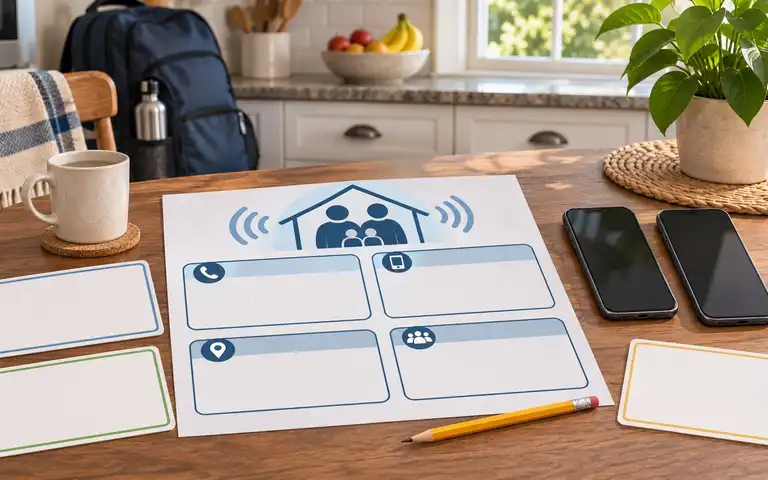
Discuss emergency coordination with roommates, establishing who checks official alerts and where to meet if separated. The CFPB disaster-preparation guidance provides frameworks for keeping important contacts and documentation protected.
Living successfully in a residence hall during an emergency requires balancing personal preparedness with adherence to strict institutional protocols and community safety standards. Because college dormitories concentrate hundreds of young adults in multi-story buildings with shared corridors, elevators, and utility infrastructure, individual preparedness actions must never compromise communal safety. For instance, storing oversized gear in hallways or propping open fire doors violates fire codes and endangers residents during an evacuation. Students should establish regular communication schedules with family members outside the campus network, ensuring that designated out-of-state contacts understand how to relay messages if local cellular towers become congested or lose power. By maintaining a compact, inspection-ready grab kit in an accessible container beneath the bed or inside a designated closet shelf, students can respond calmly and efficiently to campus disruptions without creating fire hazards or violating housing agreements.