Portable Generator Won't Start? A Safe Observation Checklist
Separate a no-start from no output or an automatic shutdown, record safe observations, and find the exact model manual before requesting service.
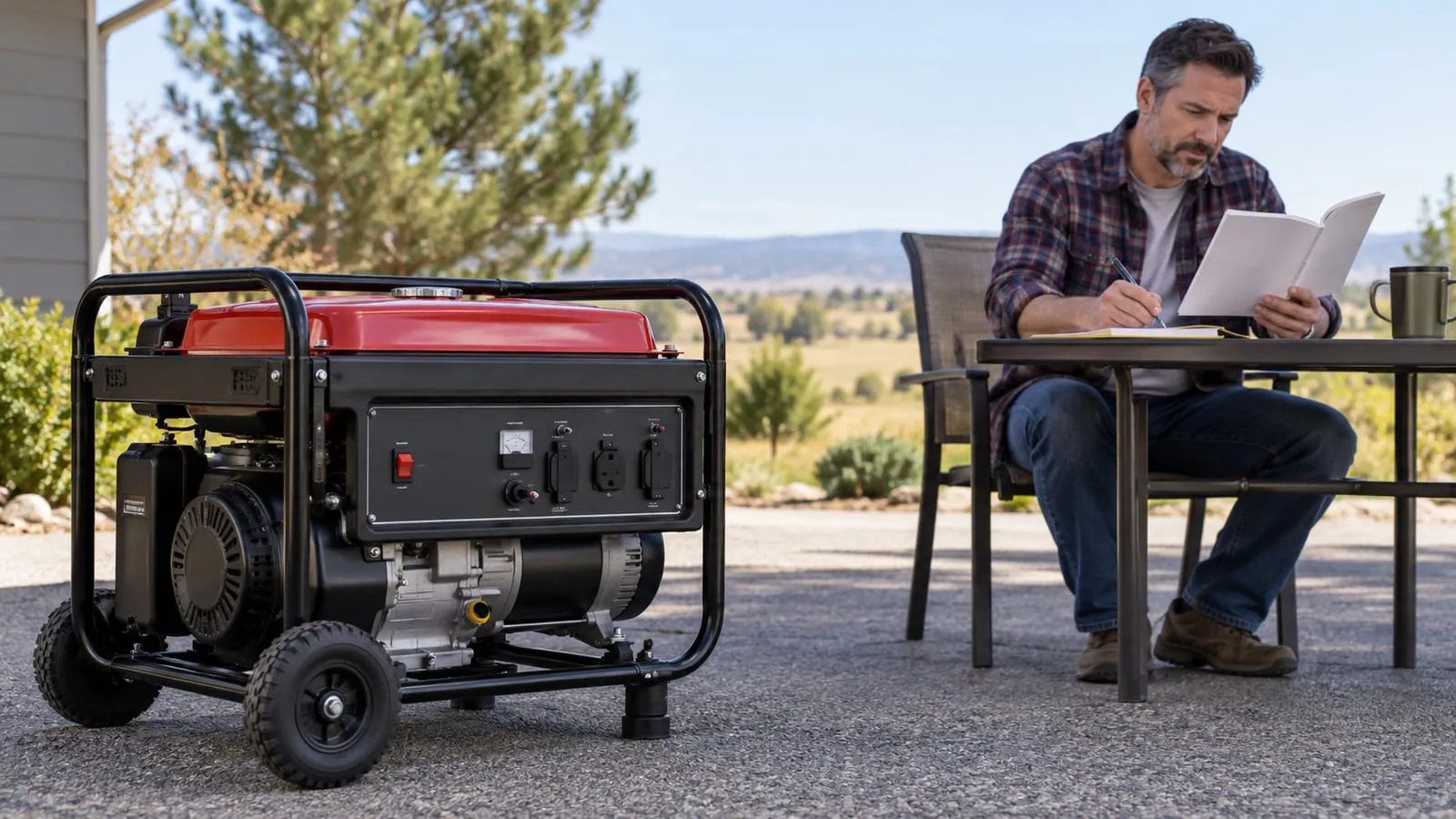
The generator has been stored since its last use, and now the engine turns over without running. A useful first result is a precise symptom report and the correct owner-manual page. That gives manufacturer support something concrete to work with while keeping a protective shutdown or an unsafe location out of the troubleshooting loop.
First make the situation safe
CPSC says to use portable generators outdoors at least 20 feet from the home, with exhaust directed away from nearby buildings. Follow the model’s placement instructions and local requirements too; a distance alone does not establish a safe location. Never run it in a home, garage, basement, or other enclosed or partly enclosed space. If a carbon-monoxide alarm sounds or anyone feels ill, move to fresh air immediately and contact emergency services, as CPSC directs. Do not troubleshoot the machine while it is hot, running in an unsafe location, or leaking fuel.
Identify which symptom you have
| What you observe | Record | Next reference |
|---|---|---|
| Engine does not start | Whether it cranks, indicator lights, display messages, and the last known operating condition | The exact model’s no-start section |
| Engine runs but outlets have no power | Which status lights or breakers are indicated, without opening covers | The manual’s no-output section and the manufacturer’s service channel |
| Engine starts, then stops | Approximate run time, any warning, load connected, and whether the unit was moved | The manual’s shutdown or warning section |
Those descriptions are not interchangeable. For example, a no-output symptom does not mean the engine failed to start. Use the manual’s own wording when you call for support.
What an owner check can establish
Generac’s no-start support page identifies model-dependent basics such as the specified controls, fuel, and oil-alert conditions. That list helps you find the corresponding owner-manual section; it does not mean every generator has the same controls or that a warning should be bypassed. For example, a unit that shuts down with a CO warning belongs on the stop and move to safety path, not the try repeatedly until it runs path.
You can often give support a better report without starting the machine again: “It cranked but never ran” differs from “It ran for a minute and displayed a warning.” Do not clear, bypass, or repeatedly reset a protective shutdown in order to collect more data. Save the exact wording already observed and let the manufacturer determine the next permitted check.
Make a safe handoff
Before contacting the manufacturer or an authorized service provider, collect:
- The brand, complete model designation, and serial number from the exterior identification label.
- The exact sequence: control positions as shown in the manual, whether the engine cranked or ran, and when the symptom appeared.
- Any displayed code or light pattern, plus a photo taken only when the unit is off and cool.
- The fuel type and last known use or storage date, without opening fuel-system components.
- The manual section you consulted and any owner check it specifically instructed you to perform.
Do not remove covers, test spark, bypass an interlock, adjust internal wiring, drain fuel, or try field-flashing procedures based on a generic article. If the manual does not clearly authorize an owner check, stop and ask the manufacturer or service provider. A leaking unit, damaged cord, burning smell, unexpected shock, or CO alarm is a stop condition, not a prompt to continue testing.
Find the manual for the exact unit
Use the model and serial information on the machine to retrieve its manual from the manufacturer. Honda’s lookup, for example, asks for generator model details; its EU2200i manual applies only to that model family. Controls and troubleshooting differ across generators, including units with different starting systems and fuel types.
If the generator starts normally but a connected appliance does not work, stop troubleshooting the engine. Check the appliance and power-source documentation separately, and do not connect a load above the generator’s rated output.