How to Check a Food Thermometer's Accuracy with Ice Water
Use a stirred ice-water slurry to check many food thermometers, then follow the exact model instructions to adjust, replace, or use a thermometer that cannot be calibrated.
In this guideJump to a section
A thermometer reading helps only if the device is being used correctly. An ice-water check can test whether many food thermometers read near freezing before you use one to measure cooked food. It does not calibrate a refrigerator’s built-in display or prove that every part of a meal reached a safe cooking temperature.
Use the appliance manual for an appliance thermometer and the probe thermometer’s own instructions for the ice check. The FoodSafety.gov internal-temperature chart supplies the cooking targets; this page checks a food thermometer’s reading against a reference.
Ice-water accuracy check
USDA FSIS says the ice-water method works for most common food thermometers. Follow these steps, then compare the result with the device manual:
- Fill a large glass with ice cubes and add drinking water. Stir well.
- Put the thermometer’s sensing area into the ice-water mixture. For the FSIS method, immerse the stem at least 2 inches while keeping it away from the sides and bottom of the glass. Follow the manual if the design requires a different depth.
- Wait at least 30 seconds. Read the thermometer while the sensing area remains in the mixture.
- The reference reading is 32°F (0°C). Record what the thermometer displays.
- If it differs, adjust it only if the manual explains how. Some dial thermometers have an adjustment nut; other models may need a different service step or replacement.
Do not assume every probe can be adjusted. If the reading is outside the manufacturer’s allowed accuracy and the thermometer cannot be adjusted, replace it or use another verified device. A single home check is not laboratory calibration.
Know which thermometer you are checking
| Device | What it measures | What to do |
|---|---|---|
| Food probe thermometer | Temperature at the probe’s sensing point inside food | Use the ice-water check when the design supports it; insert according to the manual and clean the probe between foods |
| Refrigerator/freezer appliance thermometer | Air temperature inside the appliance | Place and read it as its manual directs; do not apply food-probe immersion steps unless the maker specifically allows it |
| Built-in refrigerator display | A system reading or setpoint determined by the appliance | Consult the appliance manual; a displayed setpoint is not necessarily a measurement of each food item |
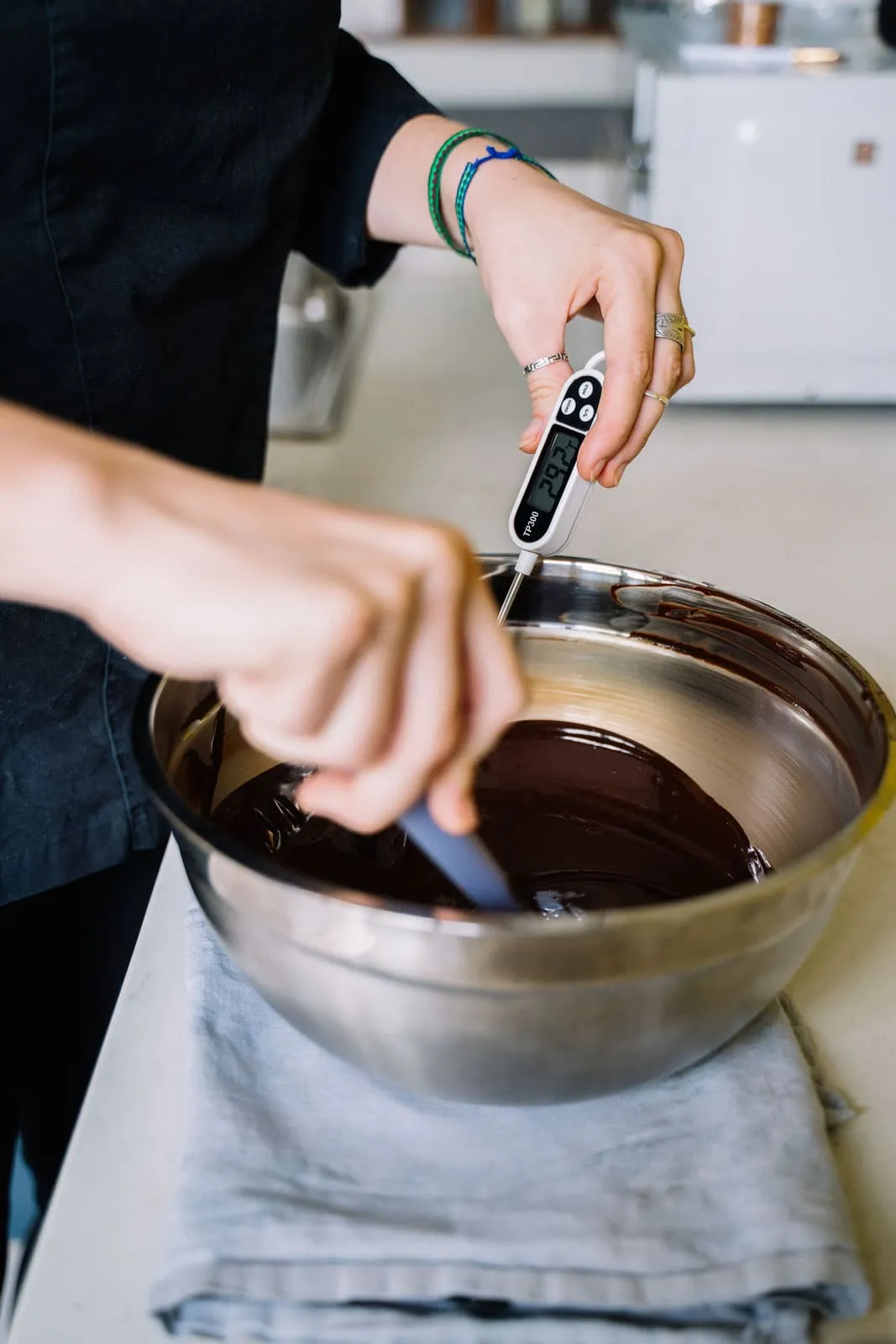
A probe thermometer must reach the right part of the food. USDA FSIS says to measure the thickest portion, away from bone, fat, or gristle; for thin food, insert it from the side toward the center. Read the exact product manual for the sensing area and immersion depth.
If the reading is off
Check the thermometer’s adjustment instructions before turning a nut or changing a digital setting. Retest after an allowed adjustment. If the device still does not meet the maker’s accuracy range, has a damaged stem, gives inconsistent readings, or cannot be adjusted, replace it. Do not compensate by guessing a fixed number of degrees in every recipe.
Wash the probe with hot, soapy water or as the manufacturer directs. Many thermometers should not be immersed; cleaning and storage rules depend on the model. Keep the probe protected from damage and keep the manual or product support link with the household kitchen record.
Keep a short accuracy record
| Check date | Thermometer and model | Ice-water reading | Adjustment allowed? | Result / next step | Recheck date |
|---|---|---|---|---|---|
For example, if a food probe reads 34°F in the stirred ice-water mixture, do not simply subtract 2°F from every future reading. Check whether the model allows adjustment, adjust as directed, then repeat the check. If it cannot be brought within the maker’s stated tolerance, use another thermometer or replace it.
A food thermometer check does not replace checking each food in the appropriate location or following the safe-temperature chart. Use the chart whenever you cook or reheat food, and keep an appliance thermometer in the refrigerator or freezer to monitor storage temperature separately.