INFO
Before buying, write down the water result, exact filter and cartridge model, certified PFAS claim, rated capacity, and replacement date. If one line is missing, the comparison is not finished.
This guide is for a routine household purchase decision. It does not replace emergency water storage, a health department notice, or a do-not-drink advisory.
EPA identifies granular activated carbon, ion exchange resin, and reverse osmosis as home treatment technologies that can greatly reduce PFAS when correctly selected and maintained. The exact product claim still matters.
Certification guidance checked September 30, 2026. Recheck the exact model listing at purchase time; a saved screenshot or old retail page is not proof of a current claim.
Step 1: confirm the problem
Public water
Read the latest Consumer Confidence Report and any PFAS notice from the utility. Record:
- Which PFAS were detected.
- The measured levels and sample date.
- Whether the result represents a single sample or a compliance average.
- What the utility and state agency recommend.
EPA’s PFAS drinking-water page provides the current federal rule status and supporting materials.
Private well
Use a qualified laboratory and follow the health department’s sampling instructions. PFAS sampling is sensitive to materials and handling, so do not substitute an unverified home strip for a laboratory result.
If there is no evidence of PFAS in the water, ask the utility or health department whether treatment is useful before buying equipment.
Step 2: choose the treatment location
Point-of-use treatment handles water at one fixture, usually for drinking and cooking. Point-of-entry treatment handles water entering the home and requires a larger design, more maintenance, and a clear reason to treat all uses.
For many households focused on ingestion, point-of-use treatment is the simpler place to begin.
| Type | Practical fit | Watchouts |
|---|---|---|
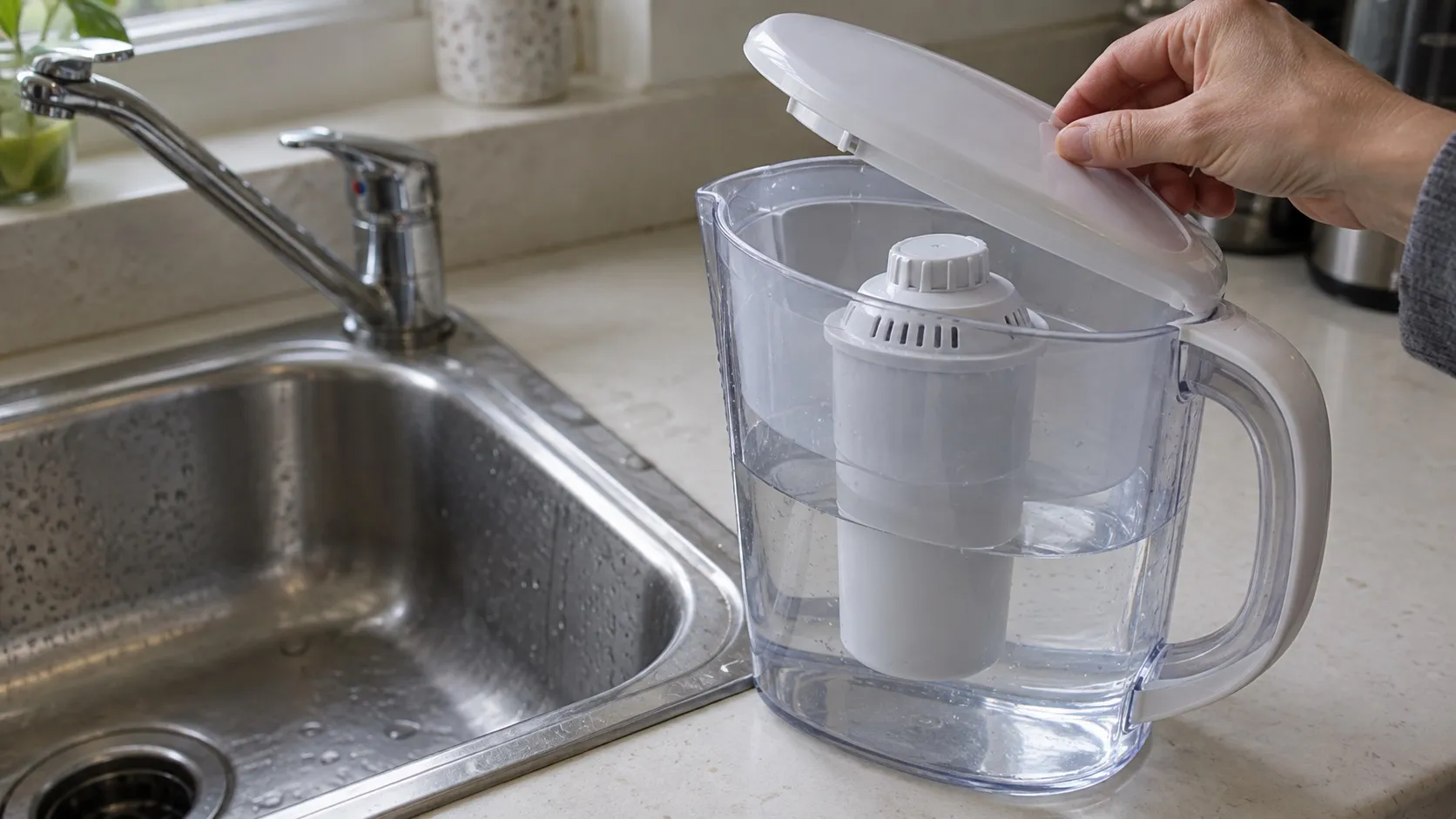
| Certified pitcher or faucet filter | Lower-cost point-of-use start | Flow, small capacity, frequent replacement |
| Under-sink carbon or ion exchange | Dedicated drinking and cooking tap | Installation, capacity, exact PFAS claim |
| Point-of-use reverse osmosis | Broad dissolved-contaminant reduction when certified | Reject water, drain, pressure, membrane service |
| Whole-house treatment | Documented need across household uses | Professional design, cost, media disposal, monitoring |
Do not choose by category alone. Two products that look similar can carry different certified claims.
Step 3: verify the exact claim
EPA recommends looking for certification under NSF/ANSI 53 or NSF/ANSI 58 for PFAS reduction. NSF explains that filters certified to NSF/ANSI 53 or reverse osmosis systems certified to NSF/ANSI 58 need a PFAS designation for that claim.
| Label or standard on the box | Typical filter type | Does the standard number alone prove PFAS reduction? | What you must verify in the certifier’s database |
|---|---|---|---|
| NSF/ANSI 42 | Standard taste, odor, and chlorine pitchers | No — aesthetic effects only | Do not rely on an NSF 42-only cartridge for PFAS; check whether an NSF 53 cartridge fits |
| NSF/ANSI 53 | Carbon block / ion-exchange pitchers and under-sink | Only with a named PFAS claim | Confirm the exact housing + cartridge model lists Total PFAS, PFOA, or PFOS reduction |
| NSF/ANSI 58 | Point-of-use Reverse Osmosis (RO) systems | Only with a named PFAS claim | Confirm the exact RO system and membrane/post-filter set lists a specific PFAS reduction |
| “Tested to NSF standards” | Uncertified marketing copy | No — not an accredited certification listing | Look for the official NSF, WQA, IAPMO, or CSA mark and verify the model in their directory |
Use this sequence:
- Write down the exact model number, including cartridge or replacement element.
- Open the certification body’s current product listing.
- Find that exact model.
- Confirm a PFAS, PFOA, or PFOS reduction claim that matches your concern.
- Read rated capacity, flow, pressure, and replacement conditions.
- Save a copy of the listing and instructions with the installation record.
Useful official starting points:
- EPA: Identifying Drinking Water Filters Certified to Reduce PFAS
- NSF: Contaminant Reduction Claims Guide
- NSF: Water Filter FAQ
Certification has a scope
EPA’s filter page dates its certification-threshold warning to April 2024. For a purchase now, read the exact model’s current certified claim and test conditions. A PFAS reduction claim alone does not guarantee that your household water meets federal drinking-water limits.
Step 4: check the operating burden
The filter only works as planned when the household maintains it.
Before buying, record:
- Replacement cartridge or membrane cost.
- Rated gallons and time interval.
- Expected household daily volume.
- Flow rate and refill time.
- Water pressure and installation requirements.
- Reject-water needs for reverse osmosis.
- Replacement availability.
- Disposal instructions.
An expensive system with an overdue cartridge is not a durable plan. A smaller certified point-of-use system maintained on schedule may be more useful.
Step 5: keep a maintenance record
| Item | Model | Installed | Rated gallons | Replace by | Notes |
|---|---|---|---|---|---|
| Primary filter | |||||
| Pre-filter | |||||
| RO membrane, if used |
Review the utility report at least annually and after any PFAS-specific notice. Replace components according to the certified product instructions, not by taste alone.
Use the filter-cartridge service record to capture the exact replacement part, installation date, rated gallons, and calendar endpoint. This maintenance check follows selection; it does not verify a PFAS claim.
Keep emergency water separate
A PFAS filter does not replace an emergency water supply. A boil-water advisory may involve germs. A flood or industrial incident may involve unknown chemicals. A point-of-use unit may also stop working if pressure, power, or plumbing is lost.
Maintain both:
- Known safe stored water for immediate use.
- A routine PFAS treatment plan based on current data and a verified claim.
- Advisory-specific instructions for germ risks.
- A rule to use another source when fuel or toxic chemicals are suspected.
Use the Water Storage Calculator and Emergency Water Safety Guide for the emergency side of the plan. Read PFAS in Emergency Water Planning for the boundary between PFAS and disaster treatment.
Paid links — we may earn a commission. As an Amazon Associate I earn from qualifying purchases.
 Check price at Amazon
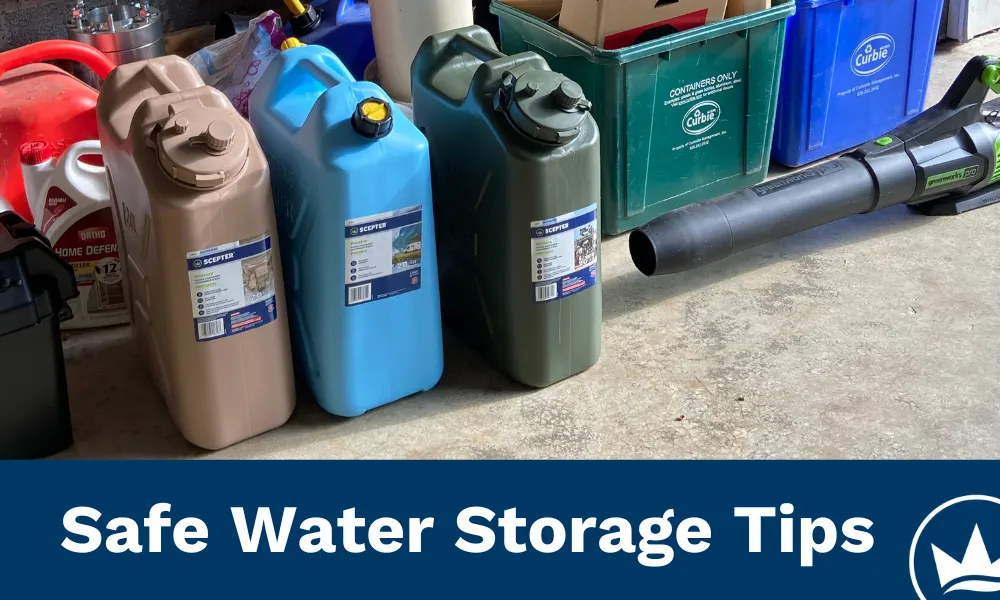
 Scepter Flow Control Water Can (WCG501)
Five-gallon food-grade, BPA-free water container with an adjustable flow-control valve for storing already-treated or known-safe drinking water ahead of plumbing or pressure outages.
- Listed water capacity
- 5 US gal
- Empty container weight
- Not verified in this source record
- Stacking when filled
- Not verified in this source record
Source records checked on 2026-10-04. This is research, not hands-on testing. Manufacturer source.
PFAS home filter FAQ
- Does NSF/ANSI 53 or 58 automatically mean PFAS reduction?
- No. Verify the exact model and a specific PFAS, PFOA, or PFOS reduction claim in the current certification listing. The standard number alone is not the contaminant claim.
- Should I treat the whole house for PFAS?
- Start with your water data and exposure goal. Point-of-use treatment for drinking and cooking is often simpler. Whole-house treatment needs a documented reason, professional design, maintenance, and a disposal plan.
- Can I tell when a PFAS filter is exhausted by taste?
- No. PFAS has no reliable taste signal. Follow the certified capacity and replacement schedule, and use follow-up testing when the health department or treatment professional recommends it.
Compare exact models before buying
Put two or three exact model numbers into the maintenance table above, then verify each current PFAS claim in an accredited listing. If the purchase is for an active incident rather than routine treatment, stop and use the Emergency Water Safety Guide and local instructions instead.