Safe Emergency Heating During a Power Outage: Four Practical Options
Compare four safer ways to stay warm during a power outage, with clear carbon monoxide, fire, ventilation, and evacuation limits from public safety authorities.
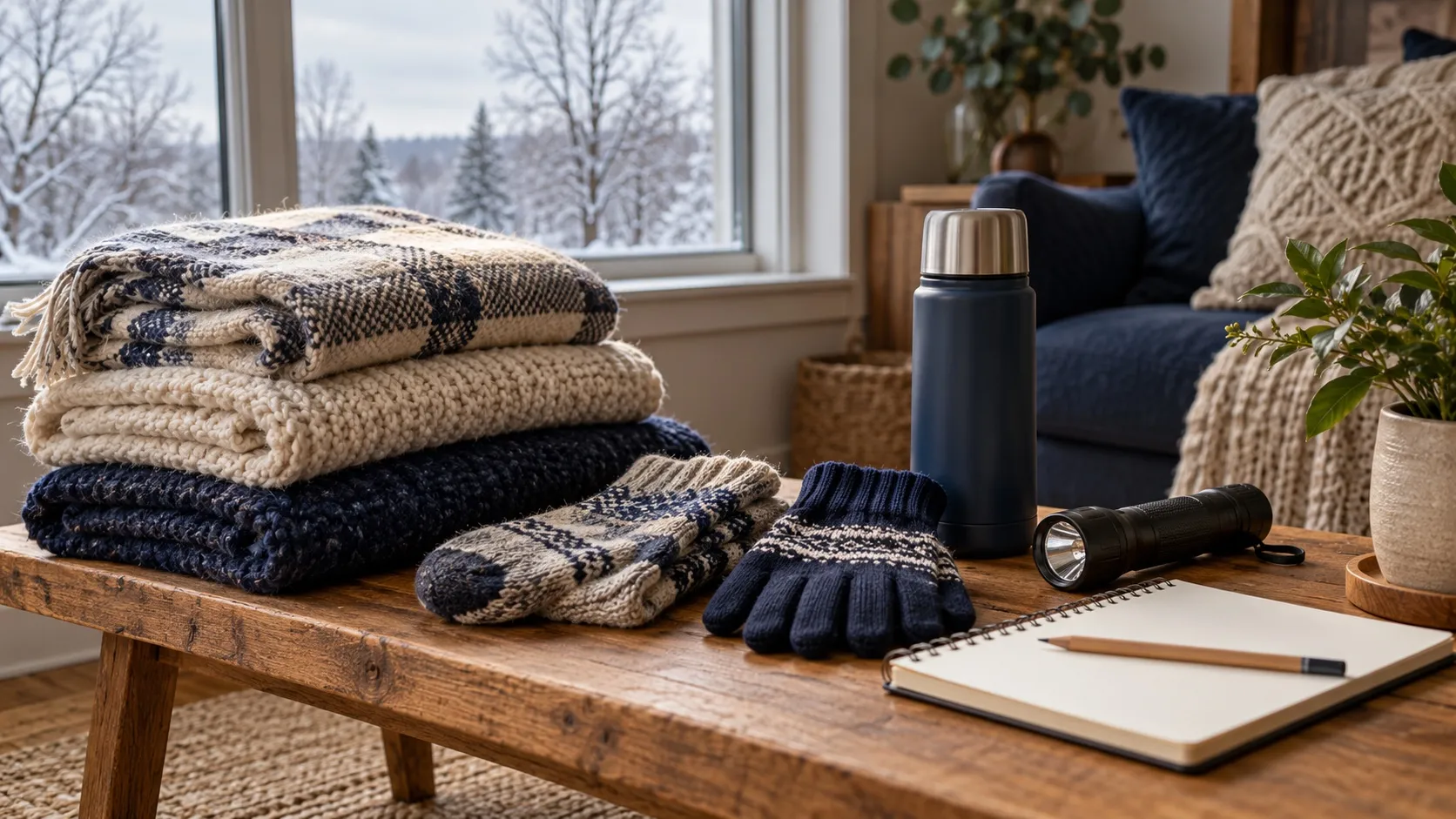
Emergency heat is a safety problem before it is an equipment problem. A cold home can become dangerous, but an improvised flame or engine can create carbon monoxide, fire, or burn hazards within minutes.
The safest plan starts before an outage: maintain the home heating system, install working smoke and carbon monoxide alarms, identify a warm location you can reach, and know when your household will leave. The CDC generator safety guidance says generators must stay outdoors and more than 20 feet from doors, windows, and vents. The National Fire Protection Association heating guidance recommends keeping anything that can burn at least three feet from heating equipment.
For the complete safety rules, read Indoor Heating Safety During a Power Outage before choosing equipment.
If the normal system is a heat pump and you are interpreting AUX or Emergency Heat, use the thermostat-mode comparison first. Those labels describe installed controls; they do not establish an independent outage heat source.
First option: conserve body heat
For a short outage, reducing heat loss is often safer and more effective than adding a portable flame.
- Choose one occupied room that can be closed off without blocking an exit.
- Wear dry layers and cover the head, hands, and feet.
- Use blankets and sleeping bags that are in good condition.
- Close curtains after sunset, but keep fabric away from heaters and open flames.
- Block obvious drafts with rolled towels while preserving any ventilation required by installed equipment.
- Check children, older adults, and anyone with medical or mobility needs more often.
Babies need a warm, clear sleep space
Infants under one year should not sleep in a cold room. The CDC winter weather guidance recommends warmer clothing, such as footed pajamas or a wearable blanket, and keeping pillows and other soft bedding out of the baby’s sleep space. If you cannot keep the home warm, arrange a safe heated place to stay. Follow local travel advisories when planning the move.
Do not use exercise as a substitute for safe shelter when someone is becoming confused, unusually sleepy, or uncoordinated. Those can be signs of cold stress. The CDC winter weather guidance explains hypothermia warning signs and when to seek emergency help.
Second option: use an existing, inspected heating system
A permanently installed fireplace, wood stove, or other vented appliance may continue to work during an outage, depending on its design. Use it only if it has been inspected, maintained, and operated before the emergency.
- Follow the appliance manual and local fire code.
- Use the specified fuel only.
- Keep the required clearance from walls, furniture, curtains, and stored supplies.
- Use a protective screen where the appliance requires one.
- Dispose of cooled ashes in a metal container stored outdoors away from structures.
- Never add a portable stove or temporary flue to a room during an outage.
If the chimney, vent, fuel line, or appliance is damaged or overdue for inspection, do not improvise a repair while the household is cold and tired. Move to the no-combustion plan or a designated warming location.
Third option: use a portable heater exactly as labeled
Some portable heaters are labeled by their manufacturer for a specific indoor use. That label is not a general promise that combustion is safe in every room.
Before operation:
- Read the current manual for the exact model.
- Confirm the permitted location, fuel, cylinder size, clearances, ventilation, and supervision rules.
- Test smoke and carbon monoxide alarms.
- Place the heater on a stable surface where children and pets cannot reach it.
- Keep bedding, clothing, paper, and furniture at least three feet from a portable heater, or farther away when the exact manual requires more clearance.
Turn portable heaters off before sleeping. Follow the exact manual for all additional restrictions. For fuel-burning portable heaters, also follow every location, ventilation, fuel, refueling, and supervision restriction in the exact manual. Do not rely on a cracked window, oxygen-depletion sensor, tip-over switch, or carbon monoxide alarm as permission to relax those limits.
Electric space heaters can also start fires or overload a backup-power system. CPSC says to plug a portable electric heater directly into a wall outlet, never an extension cord or power strip. If that circuit is supplied by backup power, confirm that the complete backup system, circuit, and connection method support the heater’s continuous load rather than relying on the watt number alone.
Fourth option: leave for a safe heated place
Leaving is a heating method. It is often the best one when the home cannot be kept safe.
Identify several options before winter:
- a friend or relative outside the outage area;
- a hotel that can meet accessibility or pet needs;
- a public warming center announced by local emergency management;
- transportation that does not depend on one person or one vehicle.
Follow local travel restrictions and evacuation instructions. Call the emergency number for your area if anyone has signs of carbon monoxide exposure, severe cold stress, or another immediate danger.
Equipment that stays outside
Never operate a generator, charcoal grill, gas grill, camp stove, pressure washer, or vehicle in a home, garage, basement, crawl space, porch enclosure, or near an opening. Opening a garage door does not make generator use safe. Do not route generator exhaust or captured exhaust heat into a building.
Do not heat a room with a cooking oven, a homemade alcohol burner, a candle-and-flowerpot device, hot bricks, or a temporary wood stove. These methods add fire, burn, air-quality, or carbon monoxide risk without controlled heating performance.
Build a household heating decision
Write down three triggers:
- Monitor: the indoor temperature is falling, but everyone is warm, alert, and able to follow the plan.
- Move: the designated warm room is not holding temperature, essential medical equipment cannot be supported, or a safe heater cannot be operated as directed.
- Call for help: a carbon monoxide or smoke alarm sounds, anyone has symptoms, or fire, electrical, or fuel damage is present.
Keep these triggers on a paper heating card with the primary and alternate heated destination, how each person will get there, and the care or device-provider contact to use if support fails. Confirm destination access before travel.
Use the Outage Readiness Planner to choose fixed outage conditions, essential systems, and backup options, then review its suggested actions. It has no fields for destinations, contacts, or leave triggers and cannot approve a heater, generator location, fuel connection, or electrical installation.
To understand an electric heater’s energy burden, the heater wattage and cost example separates input power, energy over time and the limits of a battery-runtime estimate.