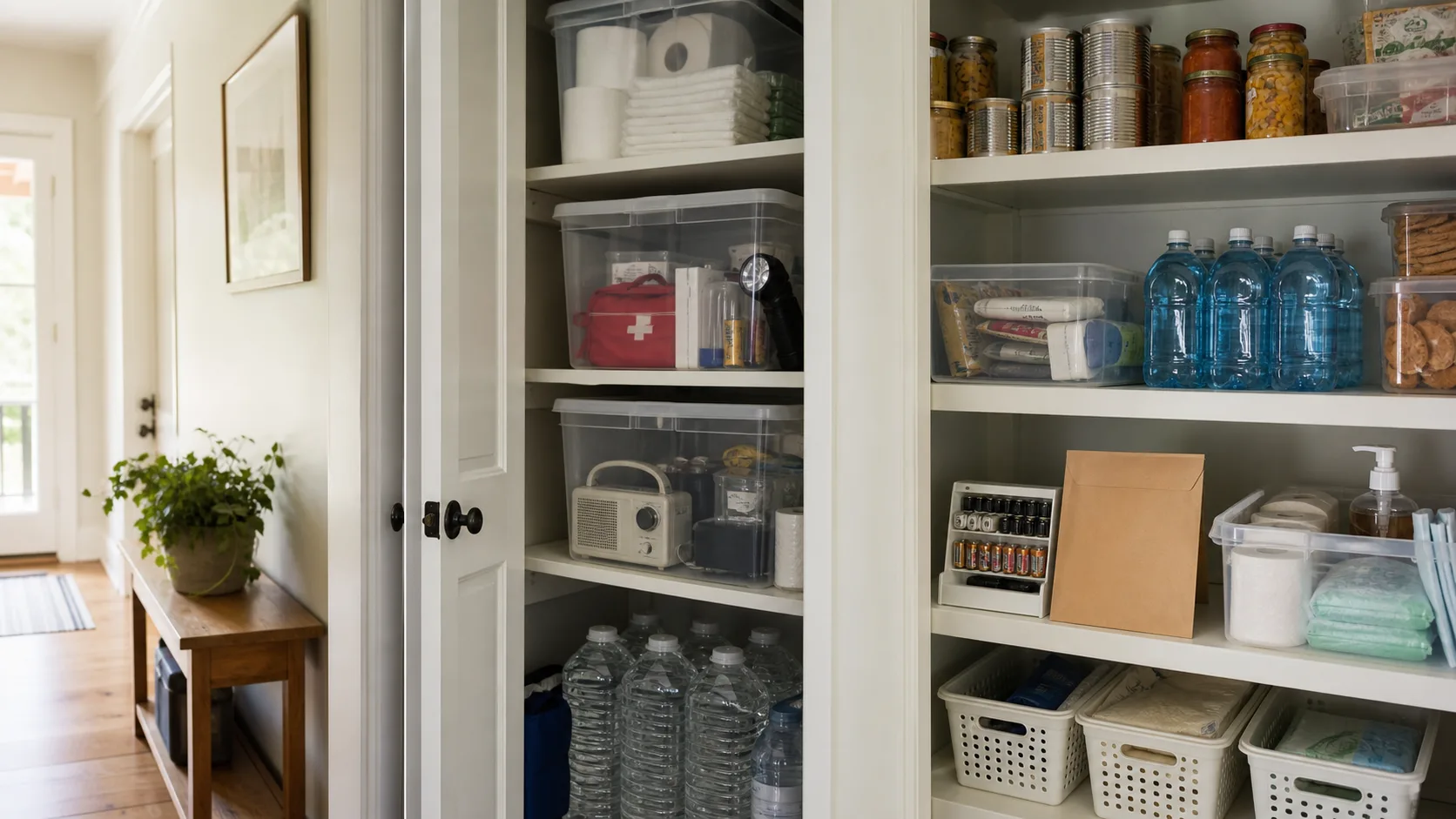
Disaster Preparedness Checklist: A Household Planning Review
Review household needs, local hazards, alerts, evacuation, water, food, medication, communication, backup power, documents, pets, maintenance, and practice.
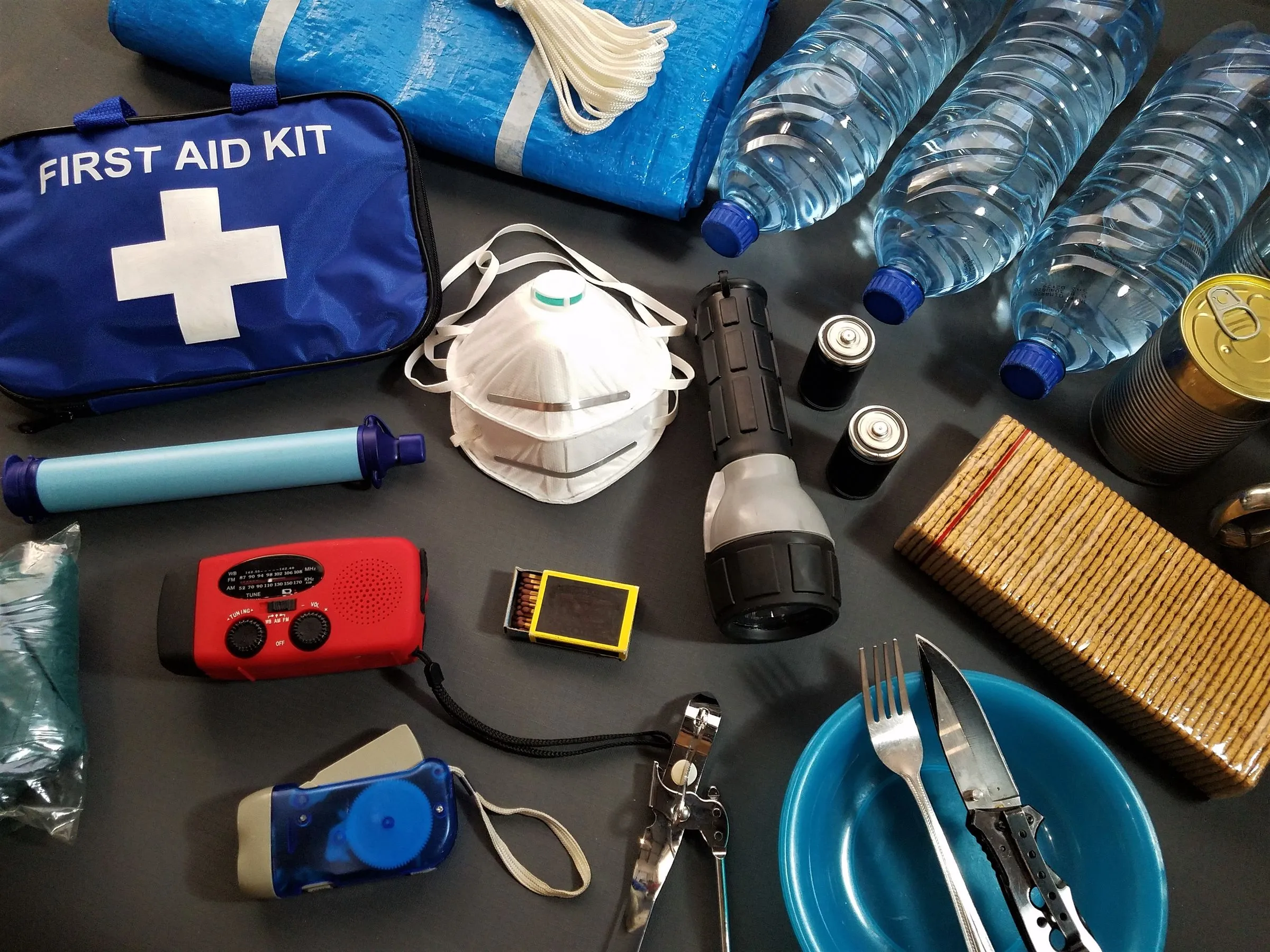
Interactive checklist
Start with these household actions
0 of 4 complete. Save status appears when this checklist starts.
Use this checklist to review and maintain a household plan twice a year. The Home Resilience Guide explains how the systems fit together; this page is the shorter record of what has been checked, assigned, and practiced.
Baseline kit items follow Ready.gov emergency kit guidance. Adapt every item to local hazards, building rules, health needs, climate, budget, storage, and evacuation options.
People and care
- List everyone who may be at home, work, school, care, or another address.
- Record medication, allergy, pharmacy, clinician, and equipment-provider contacts.
- Ask the provider about refrigerated medicine and powered medical equipment.
- Include mobility, hearing, vision, language, memory, pregnancy, infant, and caregiver needs.
- Plan food, water, medication, carriers, and records for pets or service animals.
- Choose trusted support contacts and define what help each person has agreed to provide.
Use the Senior Emergency Preparedness Guide where care continuity or accessibility changes the plan.
Hazards and official information
- Identify the hazards named by local emergency management.
- Look up official evacuation zones, flood maps, wildfire guidance, shelter locations, and winter routes that apply.
- Enable Wireless Emergency Alerts and local notification systems where appropriate.
- Save utility, weather, public-health, school, work, and building contacts.
- Keep a battery radio when it fits local guidance.
- Put essential instructions and contacts on paper.
Do not rely on one app, a social feed, or a national checklist to determine local risk.
Communication and evacuation
- Choose an out-of-area relay contact.
- Choose a nearby meeting point and a regional destination.
- Map primary and alternate routes.
- Decide who transports children, older adults, pets, and essential equipment.
- Keep identification, keys, medication, light, phone power, water, and a small amount of food in a portable layer.
- Write a short status-message format and next check-in time.
Use the Emergency Communication Plan and practice without staging unsafe travel.
Water and food
- Store potable water in food-grade containers and label the date.
- Keep potable water separate from sanitation water.
- Follow local boil-water and do-not-use notices.
- Store familiar shelf-stable food that fits dietary needs.
- Include no-cook meals and a manual can opener when needed.
- Keep a refrigerator and freezer thermometer.
- Rotate food through ordinary meals.
Start with the water storage safety guide and emergency food basics. The CDC emergency water guide explains storage and treatment limits.
Light, power, and alarms
- Keep flashlights or headlamps and correct batteries accessible.
- Charge phone power banks and label cables.
- Test smoke and carbon monoxide alarms on the manufacturer schedule.
- Record essential electrical loads from labels and manuals.
- Verify medical-device backup with the provider.
- Review generator, battery, inverter, and transfer-equipment limits.
Use the Outage Readiness Planner to select fixed outage conditions and review suggested actions. The backup power systems guide covers the next decision; qualified professionals and local code govern household electrical work.
The CDC generator safety guidance requires generators outdoors and more than 20 feet from doors, windows, and vents, with a working battery-powered or battery-backup CO alarm inside.
Home and sanitation
- Find water, gas, and electrical shutoffs without attempting unsafe work.
- Keep exits, alarms, extinguishers, and utility access clear.
- Inspect drainage, roof, pipes, heating, trees, and known vulnerabilities.
- Arrange qualified service before the hazard season.
- Store soap, toilet paper, sturdy bags, and cleaning supplies.
- Know the local plan for water or sewer disruption.
The Home Improvement Preparedness Guide helps prioritize low-risk maintenance and professional assessment.
Documents and finances
- Keep protected copies of identification, insurance, medical, pet, school, and home records.
- Maintain a home inventory with photographs stored securely.
- Ask the insurer or licensed agent about actual coverage, exclusions, deductibles, and waiting periods.
- Keep cash in an amount appropriate to the household and store it securely.
- Record account and claims contacts without exposing passwords.
Practice and maintenance
- Find the kit, lights, shutoff, paper contacts, and document folder.
- Send the check-in message.
- Walk the shelter or evacuation route in ordinary conditions.
- Test approved equipment according to the manual.
- Rotate water, food, batteries, and medication information.
- Update the plan after moves, health changes, new pets, school changes, or equipment replacement.
- Name the conditions that mean leave or call for help.
For hazard-specific work, use the current guide named by local emergency management rather than adding every possible scenario to this review.
Turn gaps into assigned actions
Mark each unfinished item with an owner, a realistic date, and the evidence that will show completion. Evidence may be a service record, current contact card, photograph, permit, receipt, successful drill, or equipment test performed according to the manual. Escalate unsafe repairs and code questions to the appropriate qualified professional instead of leaving them as indefinite do-it-yourself tasks.
Questions about using the checklist
How often should a household review this checklist?
Twice a year is a manageable baseline, with another review after a move, health change, new pet, school change, major home project, equipment replacement, or an emergency that exposed a gap.
Is a supply checklist the same as an emergency plan?
No. Supplies are one layer. A plan also defines alerts, communication, care continuity, evacuation, transportation, utility safety, backup locations, and the conditions that mean call for help or leave.
Keep gap owners, dates, and completion evidence on a private sheet, with destinations and transport in the protected household plan. Use this article’s checklist and My Household Plan to track completion; neither stores those private details.